

Dear Kathy,
I have started to think that we have lost our ability to tolerate each other. One part of my family doesn’t speak to me because of who I voted for in the last presidential election. Recently, my siblings treated me so badly, I wanted to cut them off. Sure, I was upset, but why did I feel the impulse to estrange? What has happened to our (my) tolerance of difference?
— Upset, disappointed, annoyed, and considering estranging
Dear Annoyed and Thinking of Estranging,
It’s tough when you feel hurt and you want to lash out. You feel mistreated and misunderstood. You want to feel respected in your choices and values, and you don’t. Maybe old patterns in your sibling group came up. Growing up, were you the family scapegoat? Were you the middle child in a large-ish sibling group and felt lost in the crowd? Likely, you didn’t/couldn’t get everyone’s respect, and you were reminded of that in your last sibling encounter. Old patterns can make you feel like giving up!
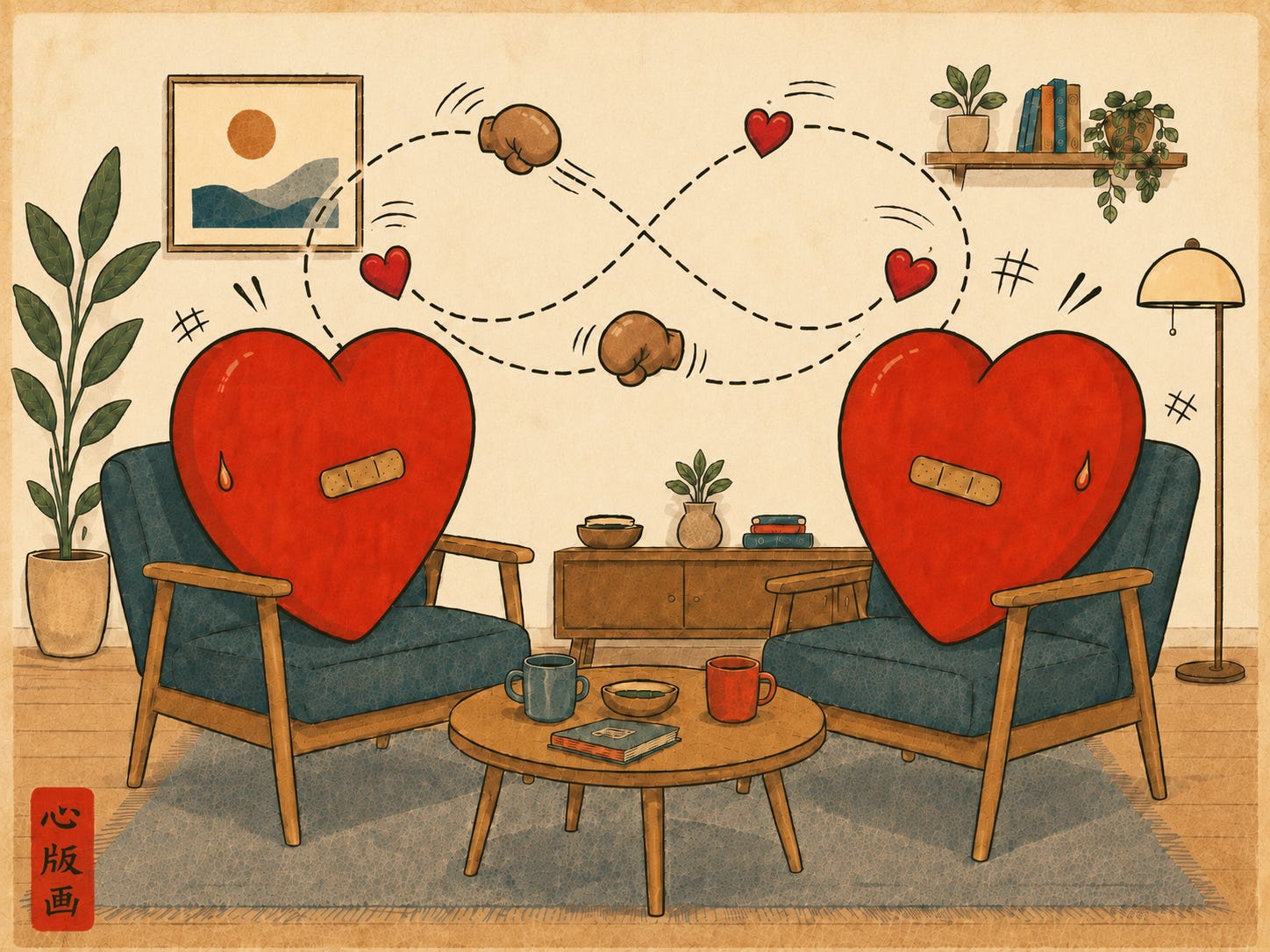
I think that when we feel the urge to estrange a loved one, we typically do it out of deep personal discomfort with that loved one—specifically, because we don’t like how we feel when we are with them.
I was sent an archived essay by Tim Kreider titled “I Know What You Think of Me.” It was published in the NYT in 2013.
“We all make fun of one another behind one another’s backs, even the people we love. Of course we do — they’re ridiculous.”
Kreider is reminding us that we are ALL ridiculous. (It’s important that we include ourselves.) We tend to forget this as we try to duck or refute others’ opinions of us.
Recently, four close friends were on a text thread together. One shared a vulnerable accomplishment. Two of the others—mistakenly thinking they had jumped over to a separate, private thread—mocked the accomplishment. The sharer, seeing the mocking, was hurt and cancelled her travel plans with her friends.
Interactions like this happen all the time, and typically (me included), we feel wounded, take offense. But isn’t it true that we often talk about each other when the “other” isn’t present? It’s a common human activity, yet we act as if it should never happen to US.
It can be painful when we discover the comments, of course. But why are we so shocked? Why do we expect we are exempt, even when we make this kind of remark ourselves? Aren’t we all ridiculous? Wouldn’t it help us to hold this more consciously—to be able to say, “Aren’t I ridiculous? And you, too?”
I think Kreider’s essay is useful in estrangement in the following way: are we not embracing our ridiculousness enough to be able to tolerate each other’s ridiculous (different) parts? For example, people estrange over how we voted in the last election, immigration policies, gender questioning, or lifestyle. Our judgments of others and our discomfort with their choices lead us to estrange them. Note my emphasis on our discomfort.
One contributor to this phenomenon of not tolerating difference—or our discomfort—comes from our devices. With our algorithms, we are fed information that matches what we already think, trends that we have already established. Our feathers are not ruffled; we don’t wince at anything we see or hear. Does this decondition our emotional muscles for accepting difference? If we don’t know or see anyone or anything different, does our tolerance window grow smaller?
More to the point, I think, is that some of us have unrealistic beliefs that we should be able to please everyone—which can make any criticism or disapproval feel huge. For women, this often began as being a “good girl.” In a recent podcast conversation between Dr. Becky Kennedy and Belle Burden, author of Strangers: A Memoir of Marriage, both confessed to having grown up in the role of “good girl.” A “good girl” has to please everyone—at great cost to herself and her development. How does it happen that she has become so dependent on others seeing her as good? What if she could think, as Kreider does, that her drive to please everyone is actually “ridiculous,” helping her realize that universal approval is unattainable and actually harmful to her?
Taking this another step, what if we realize that other people are simply going to bother us? Period. Hopefully not all the time, but a share of the time. This brings to mind Jean-Paul Sartre’s famous line from his play No Exit:
“Hell is other people.”
Sartre didn’t mean that others are inherently evil; he meant that hell is being trapped in how other people perceive you.
So, has our current cultural moment brought us to thinking that others are disposable? That we can get rid of the “hell” of other people, be less uncomfortable, and that we will benefit from estranging them? We stand to lose so much by estranging others or being estranged: what can we do to pivot from this moment?
Pivots from Possible Estrangement
Take space before reacting. A close friend/sibling/parent/child has really offended you. Instantly you feel you never want to see them again. You have already told them not to do that a million times. Now what? Perhaps you need a pause. Catch your breath. Don’t reenter until you calm down. If you want to remain in contact, you will need to find some bandwidth for your loved one’s behavior. Not easy, but likely your best way of saving your relationship.
Ask yourself what you need from yourself to remain connected to your loved one. Is it one more conversation? Is it registering your complaint while knowing you may not make an impact? Is it looking at your own irritation to see if you could explore it a little more and thereby lessen your discomfort? Do they hit a vulnerable spot in you that you could benefit from examining more yourself?
Question your own behavior—is it off-putting, alienating? (For example, do you get angry and try to force others to be on time because of your own fears of being late? Has this led to conflict and distancing?) Can you look underneath your strong reaction to see what it is made up of? Are there allegiances to loved ones who came before (a father who got very angry when you were late, for example)? Are those allegiances worth sacrificing your current relationships with your sibling, friend, or child?
What if you accept that others will annoy you? Don’t ask yourself not to be upset. See if there is a workaround for the conflict. Yes, they voted for your most hated presidential candidate, but do you need to discuss politics? Are there other things you like to do with your loved one that you would like to preserve? Can you put down the political hatchet in order to enjoy your favorite activities with the loved one who clearly canceled out your vote?
Ask yourself why you feel intolerant of choices your loved one has made. Is there anything more you can understand about your intolerance that would help you be more open to your loved one’s POV? Not adopting it, but perhaps not flinching at it.
Ask yourself, “What is the most ridiculous thing I can remember doing?” Picture yourself doing that. Remember that we are all ridiculous, including your loved one and, first and foremost, you.
______________________________
So, Dear Annoyed and Thinking of Estranging,
Yes, other people are annoying! And we can literally wind up annoying ourselves, as well! Seeking more bandwidth for ourselves and others is key. Not easy, but key. Keeping in mind that what we are tsk-tsking over in others can turn out to be part of what annoys or hurts us about ourselves can be very helpful.
Best wishes for self-reflecting, loving, laughing, and gathering perspective. I will join you in practicing remembering that we are all ridiculous, and that includes me!
Kathy
Please reach out to me in the Comments Section or at ksinsheimermft@gmail.com
This is column #49
Love this! What a concept...that we very possibly irritate others ALMOST as much as they irritate us...and we can laugh about this very human phenomenon instead of sulking or distancing. Thanks for the reminder!!
This SO good!