

Dear Kathy,
I have spent many hours in therapy identifying my feelings. I learned to name them, identify them from my body sensations, and how to make use of them. That all seemed like progress to me and helped me in my daily life. Now, in my estrangement, it doesn’t seem to matter what I feel. When I can’t communicate what I’m experiencing, it’s as if my feelings have no value.
What should I do with my feelings now—is it sort of like the tree falling in the forest and no one hears? Can you help me figure out how to live with them anyway?
Hurt and Howling in the Wind
_________________________________
Dear Hurting and Howling,
Your feelings DO matter! And at the same time, what to do with them is the real question—especially when the person who evoked those feelings isn’t available to process them with you.
Feelings come from our bodies and the most raw parts of our psyches. They typically start as a somatic experience, followed by words, and sometimes crying or shouting.
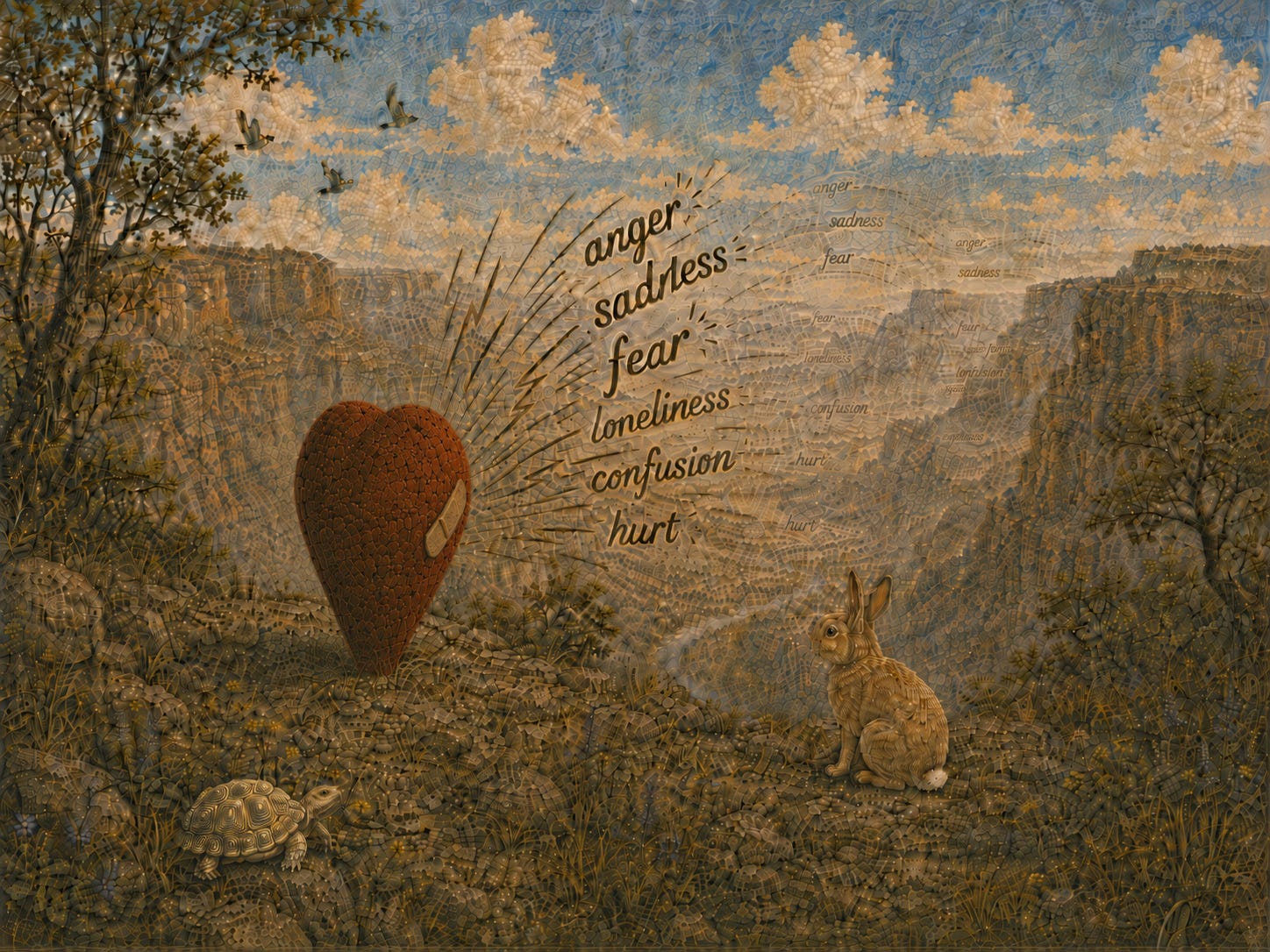
They arise from experience so quickly that we are often shocked and overcome. Have you ever had crying, rageful feelings rise up so fast you felt like you were drowning?
Yet, while they feel primitive and intense, our feelings also help us be the most human and genuine we can be. Through them, we learn to understand ourselves. And while communicating how we feel to others is deeply important, this is precisely where the blockage of estrangement is felt—you hold emotions you want to express to an adult child, parent, sibling, or friend, but they cannot or will not receive them.
A friend’s father estranged her under the influence of his third wife. My friend tried to talk with him about what was happening and how she felt, but he was unable to make space for her experience. Her pain was so deep she began to wonder if he had ever loved her at all, or if she had simply imagined being special to him. For her, it was a double loss: the loss of her father, and the erosion of her own reality. If all her grief and hurt meant nothing to him, what good was it? Was it even real?
Her feelings were valuable anyway. Here is why:
They helped her process reality: She needed her feelings to help her make sense of her experience and ground herself in response to her father’s rejection.
They explained her story: Her feelings gave her a truthful narrative to share with herself and trusted friends.
They protected her identity: Her grief was a genuine, congruent response to loss. Knowing her feelings is central to who she is. They belong to her, regardless of whether her father could witness them.
Honoring yourself and your loss: As Lisa Olivera writes:
“The practice of turning toward the ache with care—reverence, even—might be one of the most meaningful gifts we can give ourselves.”
You have had a deep shift in a loving relationship that hurts and is real. Feeling that ache is part of you, part of being alive, and part of loving the absent other.
Finding Your Way Forward
So where do you begin when you are left holding these unexpressed emotions?
Slow down. Sit with yourself, feet on the floor and slow your breath. Allow yourself to notice what you are experiencing, even if it is painful. Giving space to your inner world is a critical first step. Your estranged loved one may not be willing or able to witness your pain right now, but your experience is still yours to understand and hold.
Feel your emotions’ physical expression. Be aware of your feelings in your body. When the waves settle, consider writing or talking it through. Some people prefer private journaling, while others need to talk it out with a trusted friend or therapist. Do whatever fits you best in the moment.
Shift the frame. The pivot here is to value yourself when you feel thrown away. Remind yourself that your loved one’s choice to not engage in your relationship is largely about their own needs and uncomplete growth. It is not about your worth.
Find what is yours. While holding compassion for yourself, take time to reflect on your own patterns or contributions to past relationship dynamics. Looking honestly at what you find can help you build self-awareness and pave a path toward more complex, genuine contact if the door opens in the future.
It is both a privilege and a responsibility to be in relationship with another human being. Sometimes the challenges overshadow the connection, and we fall away. Coming back into relationship takes courage, patience, and a willingness to try again.
_________________________
So, Dear Hurt and Howling,
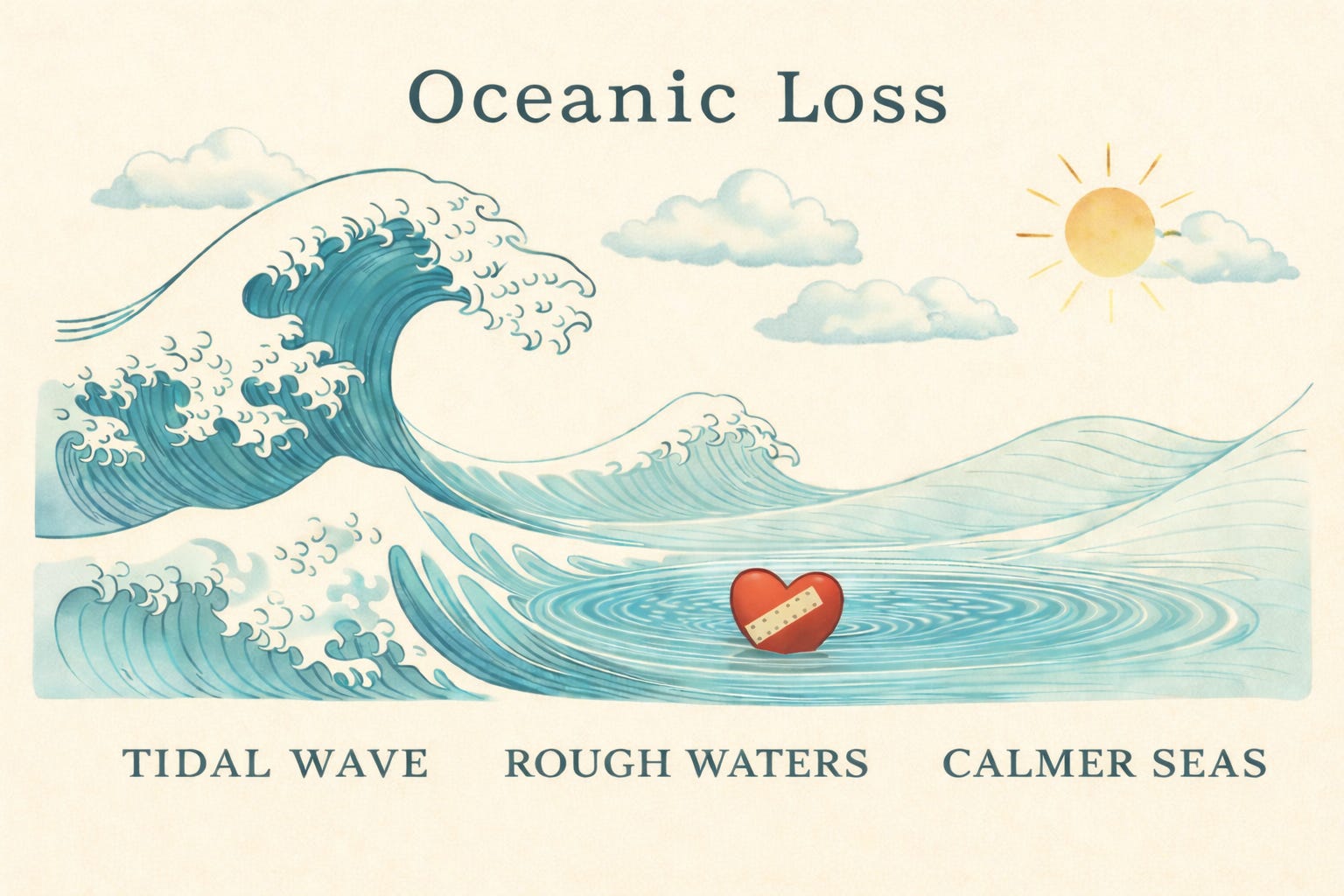
You are currently in that quiet, painful spot where your estranged loved one is distant, leaving you to sort out your responses on your own. You have moved past the initial Tidal Wave and are navigating the Rough Seas. (Here is a link to my column explaining Oceanic Loss:)
https://www.kathysinsheimer.com/p/loss-during-estrangement-a-unique
Please be deeply compassionate as you navigate toward a fuller understanding of yourself—and, in time, perhaps your loved one as well.
Warmly,
Kathy
Please reach out to me in the Comments Section or at ksinsheimermft@gmail.com
This is column #48
I find art to be a wonderful way to process feelings. Either organized community groups, online art groups or just doing your own art at home. You can do simple art projects like painting rocks, making book marks, making greeting cards with affirmations, quotes, or pictures.