

Dear Kathy,
When we started our family, we thought we would be bonded forever. We had two children and did everything together—camping, holidays, chores—all the activities that usually bring a family closer. And we thought ours was. We planned to have close relationships when our kids grew up, to care for our grandchildren—the whole nine yards.
And that is exactly how it went—until it didn’t. For several years, we were deeply involved in caring for our three grandchildren while our son and daughter-in-law worked. We were the go-to childcare on days when daycare was closed.
Then, completely out of the blue, that role was taken away. It was as if a curtain suddenly went down. Our (grown) kids told us they just wanted to “change how they arranged childcare,” but we know it’s something bigger than that. Now, we are lucky if we see our grandchildren twice a month.
We are absolutely devastated and heartbroken. Can you help us understand how to move forward when the future we assumed we’d have together has been completely cut off?
—Shocked, Heartbroken, and Lost
Dear Shocked and Lost,
It is devastating to have such a close relationship abruptly disrupted. To have a central role in your family’s daily life dismantled without a clear explanation makes your loss even more painful. It is completely understandable that you expected your active presence in your son’s family to continue. Having that connection suddenly scaled back naturally hurts to your core.
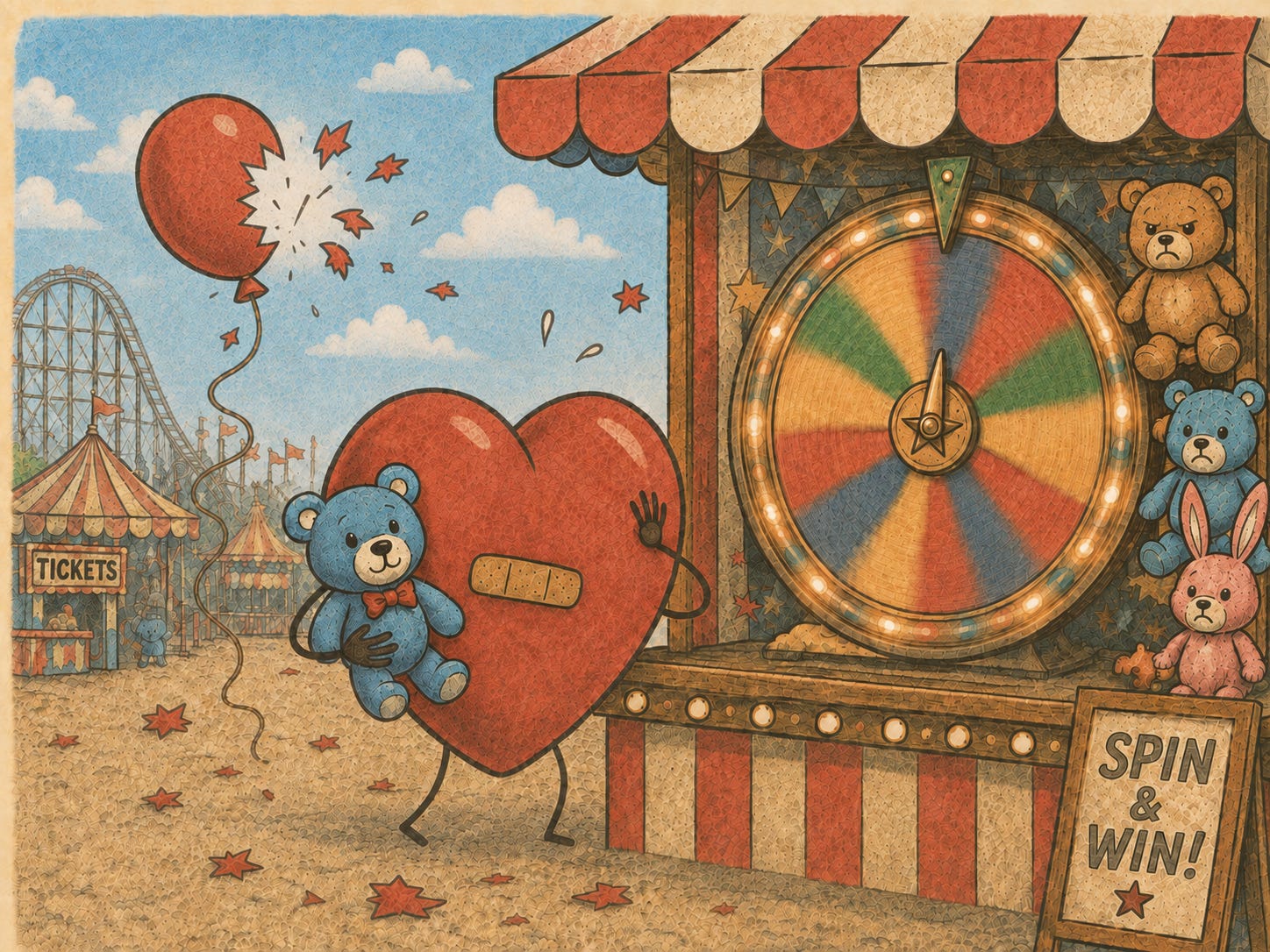
Violation of Expectation
What you are navigating is a psychological phenomenon known as Violation of Expectation. We bring two types of unwritten assumptions into every relationship:
-predictive (what we assume will happen based on past patterns) and
-prescriptive (what we feel should happen based on shared family values or norms).
Shaped by culture and personal history, these assumptions usually operate quietly in the background. But when someone abruptly rewrites the script—whether it’s a spouse or in-law pulling away, a friend ghosting, or an adult child changing the parameters of contact—it’s shocking. The version of the relationship you experienced and counted on disappears, leaving you struggling to process the chasm between what you expected and the new, shocking reality.
Pema Chödrön describes the somatic weight of this sudden shift:
“When things fall apart and the ground is pulled out from under us, we feel a deep sense of vulnerability... It is as if we were thrown out of the nest.”
I am reminded of a time when a close friend, seemingly out of nowhere, made a dramatic pivot in her way of relating to me. It took me time to even realize what was happening. But once the shift became undeniable, my disorientation set in. I realized I needed to make a shift, myself, in how I was thinking not only about my friend, but about our relationship. That necessary change hurt! I was (and am) reminded that sudden relational ruptures transmit a sense of emotional violence—the future you hoped for is thrown out, against your will. It takes a while to re-find your footing.
When groundlessness hits, your nervous system goes into a fight-or-flight response. Your body feels out of balance and your thoughts spill into disbelief. In your reactive state, it feels impossible to pause or process what’s happening clearly. The most compassionate thing you can do for yourself is to stop trying to force yourself to immediately make sense of the situation—give your shock a place to land. Slow down your breath. Give yourself permission to feel anxious, grieving, and upset.
As Brené Brown notes:
“Grief requires us to re-orient ourselves to a world that has been irrevocably changed.”
Grieving, especially in the beginning, can restrict your ability to make sense out of things. The loss of daily contact with the ones you love hurts deeply, but allowing yourself to grieve is also the engine that will eventually carry you through your disorientation. It allows you to honor your shattered expectations so you can begin to regroup.
How to Begin Re-Orienting: Practical Steps
Separate the Logistics from the Relationship: Resist the urge to debate or bargain over their childcare decision. Trying to convince them why the old arrangement was better will likely cause them to retreat further. Treat the childcare change as a settled logistical boundary for now.
Grieve the Expected Future Privately: Disentangle the grief you feel about your lost expectations from your direct interactions with your son and daughter-in-law. Unpack your shock with a therapist, support group, or trusted friends so that you don’t inadvertently bring demands or emotional pressure to your limited visits with your grandchildren.
Anchor in the Present, Not the Prediction: When your mind loops back to “how things were supposed to be,” gently bring yourself back to what is true today. Re-orienting doesn’t mean liking the new reality; it simply means choosing not to exhaust your energy fighting what has already changed.
Open the Door for Dialogue (When Ready): Once your nervous system has settled, consider reaching out to your son and daughter-in-law with gentle curiosity. It is common for families to act out difficult feelings through structural changes rather than talking about them directly. Let your son know that while it can be hard to share uncomfortable truths, you would always prefer to understand. Ask if you can sit down together so they can share what led to the shift in childcare arrangements.
Listen to Understand, Not to Defend: If they agree to talk, focus on active listening and open curiosity. Resist the instinct to justify your past contributions or defend your position. Hearing their perspective—even if it feels unfair or difficult—is often the gateway to rebuilding trust and finding a new way forward.
_________________________________
So, Dear Shocked and Lost,
You are in the painful position of mourning a future you counted on and missing daily life with your grandchildren. I am deeply sorry this has happened, but I want to offer you this: in the wake of shattered expectations, there remains room for healing, growth, and meaningful connecting with yourself and beloved others.
Best,
Kathy
Please reach out to me in the Comments Section or at ksinsheimermft@gmail.com
This is column #50

Dear JBP,
Thank you for your comment. The adult sibling groups I have worked with frequently arrive in my office after a parent or parents have passed. Inheritance issues are part of their challenge, as well as unresolved family issues that were somehow kept in check while the parent(s) were still alive.
Sometimes a living parent symbolizes a kind of family order simply by remaining alive. That parent's passing seems to take the lid off of family dynamics that were lying not far below the surface. Those dynamics then bubble up, and sometimes blow up, in the process of settling the parent's estate.
I will think about writing a column about this to flesh it out a little more.
Best,
Kathy
A great article about a heart breaking experience, I was also a very hands on grandmother to my grandkids looking after them every 2nd weekend from when they were babies as my daughter was a single parent , so close bonds were formed.
Now she is in a relationship Ive became indispensable and she made it impossible to see them, so I reverted to seeing the kids through their father who was happy for them to have a relationship with their grandmother.
I’ve spent 2 years trying to understand why my daughter wanted to hurt me, knowing how much I loved my grandchildren. Many sleepless nights and tears later, I now realise I have to put my emotional health first and I am in a position that I have absolutely no control over.
The door is open but I now prioritise myself and my partner, I am fortunate to still have my own mother and another daughter and step grandchildren to concentrate on, I could never hurt my mother like my daughter has repeatedly hurt me.
After years of emotional abuse I now know it was nothing that Ive done and that I can’t change this situation.
There is peace in accepting what is happening now.
My advice to anyone going through this is to sit back and be patient and be kind to yourself, try not to take it personally ( takes a while) and prioritise yourself and those people who are there for you. 😍💙🩷🩷