

Dear Kathy,
You have been writing about boundaries. You advised an adult child to set clear boundaries with his father so they could have a relationship instead of being cut off.
I get it, but I also don’t. If an adult child can set boundaries, what about parents?
My adult daughter has been estranged for over a year. She is somewhere between no and low contact. I wish I could set a boundary with her that would put an end to her pushing us away like this. To get her back talking with me, so we could sort this out. But I don’t think I can. If I do anything that seems like I am trying to fill the role of a parent, she balks or takes space. So, there’s really no boundary I can set as the parent. Right?
—Frustrated, Longing, Confused and Seeking Answers
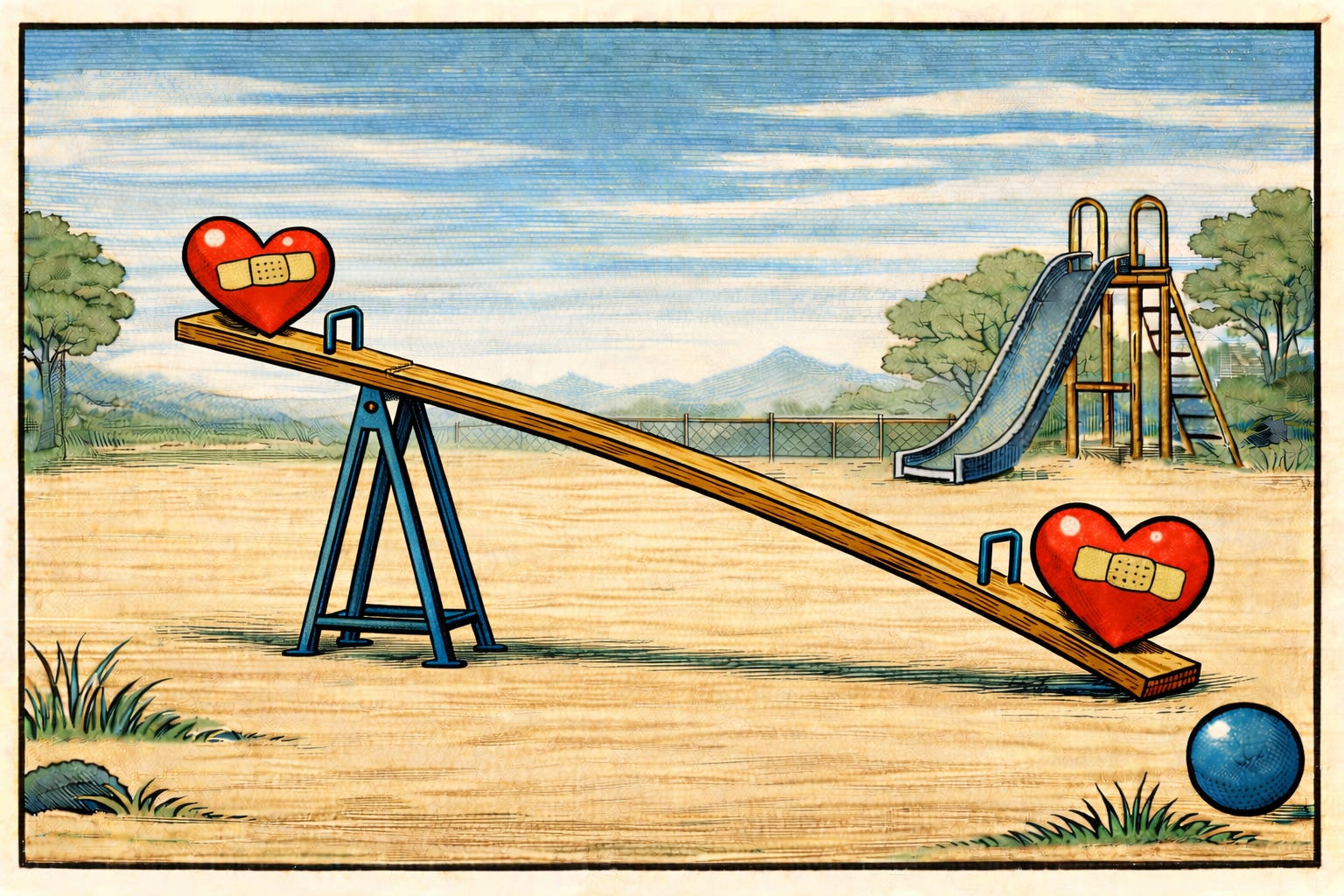
The Power Shift of the Cut-Off
This column explores the inherent imbalance in relationships where one individual (the Initiator) cuts off another (the Receiver). In any estrangement (adult child-parent, sibling, friend), the Initiator takes charge of whether and when there is contact, which is an assertion of power. Often, the Initiator feels they have been historically overpowered or unheard. Cutting contact is their way of reclaiming agency.
Once the cut-off is in place, the shoe is on the other foot. Communication is halted, leaving the Receiver standing on the outside of a locked door. When the Initiator makes this power move for their emotional survival, it leaves the Receiver feeling powerless.
Dear Seeking,
Thank you for sharing your confusion. When an adult child estranges, it is almost always an act to rebalance power. They are trying to take space to feel safe or better than they do when they are in an active relationship with you. Something in the parent-child dynamic makes them feel disempowered, so they use the only tool they feel they have left: distance.
I have had many adult children tell me they have explained to their parents exactly what is wrong, while those same parents tell me they have “no idea” why this is happening.
Often, a parent hears the words but doesn’t believe the child’s perspective is “true.” They might say, “That didn’t happen,” or “It wasn’t that bad.” When an adult child feels their reality is being erased, they stop talking. In that silence, you are not in a position to place a boundary within the relationship, because your child does not feel it is emotionally safe to engage with you.
Gayle and Oprah’s Blind Spot
We recently saw a lack of understanding of this dynamic play out on a national stage. Instagram erupted over a conversation between Gayle King and Oprah Winfrey. Gayle stated that if her children ever cut her off, she would simply refuse the boundary: “I would show up at their home.”
To a parent, this sounds like a mother fighting for her family. She would camp out on their doorstep until they let her in. But in the landscape of estrangement, this is a major boundary violation. It treats the child’s need for space as a hurdle to be jumped over rather than a wall to be respected.
Oprah’s response—that this could never happen because Gayle and her children grew up with mutual respect—misses the dynamic of modern estrangement entirely. As Rachel Haack noted in her Substack, “The Gayles of the World Get Cut Off Too.”
I can’t explain why Oprah did not seem to understand these dynamics given that she has recently focused two episodes of her podcast on this topic, but it is clear to me that she and Gayle were applying parenting structures from another time. Until recently, parents held parental authority and would be responded to if they asked their adult children to connect. For many reasons—too many for this specific column—adult children no longer feel they need to respond to parental authority in the ways parents felt they needed to respond in their own families. It is a surprise to parents that they don’t hold the authority that they expected to have, and, as asked in the letter for this column, they cannot successfully set a boundary.
Family Structures Have Changed
What Oprah tells Gayle—that she was a related, attentive parent and that should protect her relationships with her children—is what many thought prior to the current upsurge of estrangement. While the adult children I have spoken with are respectful, they no longer feel they must sustain relationships with their parents when the costs feel too high. My wish for Gayle is that her children want to be in relationship with her, but many parents who have parented as Gayle did are experiencing estrangement.
An Example: A Father-Daughter Standoff
I worked with an adult child who took space from her father when she felt betrayed by his priorities during a family crisis. Because she felt he wasn’t trying to understand her pain, she used absence as communication. Her father, used to being the authority, felt utterly powerless. He hated the boundary she set. But here is the hard truth: He could not “boundary” his way back into her life. He had to learn that his only path back was to respect the very boundary that was hurting him—to stop managing her reaction and start listening to her hurt.
Where Your Power Lives Now
So, Seeking, back to your question: Is there really no boundary I can set?
If we define a boundary as a way to control your daughter’s behavior, then the answer is no. But as Anne Katherine, author of Boundaries: Where You End and I Begin, famously wrote:
“A boundary is not a way to get someone else to change. It is a way for you to change your response to them.”
In the world of estrangement (and elsewhere), the only boundaries that work are the ones over which you have control. You are probably used to a certain amount of parental authority. In this circumstance, you must trade that authority for your own agency with yourself. The new boundaries and goals you can set are:
The Boundary of Giving Space: Respect your daughter’s “No” more than you need to satisfy your own yearning. This is a boundary on your own actions—deciding not to pursue or “camp out” on her doorstep. This shows you are listening to her.
The Boundary of Self-Reclamation: While you are a mother, you are also an individual. Attend to your own grief: “I will work toward not allowing my daughter’s absence to be the only thing that defines my worth.”
The Goal of Growth: Instead of asking “How do I get her back?”, ask, “How can I learn to listen to a truth that differs from my own? How can I grow in ways that help me with my own feelings, as well as prepare me to repair with my child if/when I get the opportunity?”
So, Dear Seeking,
Being the one cut off by no-contact is deeply painful. Your power now lies in accepting the options that are under your own control. By finding your own inner work, you live a version of yourself that is grounded, respectful and separate. If you are able to be in touch with your daughter, these practices will serve you well.
I do realize that some parents cannot achieve reconciliation, and for that, I am truly sorry. But by respecting her “No,” you are finally giving your daughter the credence she’s been looking for—and that is the only foundation upon which a new chapter of your relationship can be built.
Wishing you growth and progress,
Kathy
Please contact me through the Comments section or email me at ksinsheimermft@gmail.com
This is column #27
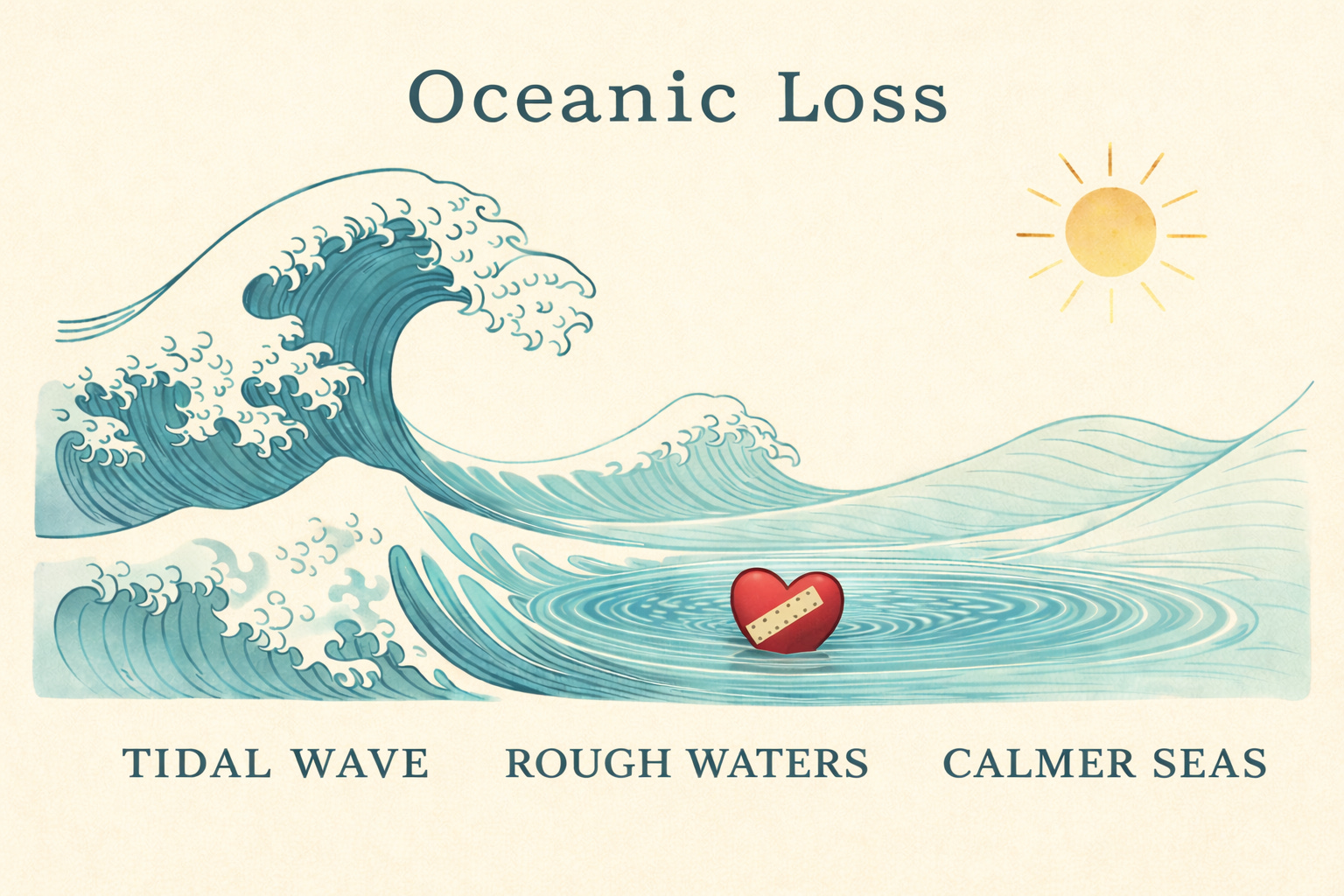
This article speaks plainly about the reality of estrangement as a move in which power is shifted and reclaimed by the initiator. There is nothing the receiver can do. If no contact is the boundary, then attempts at contact will be construed as trying to force through that boundary, aka disrespecting the initiator’s autonomy. Many articles about estrangement try to frame the recipient’s response as being an opportunity to step into their own power, by focusing on growth, finding value and meaning in other relationships, etc. This advice, which is both well meaning and necessary, falls flat for me every time. When the initiator is your own child, there is, as Josh Coleman has stated repeatedly and truthfully, no upside. The only thing in the parent’s “power” is to find a way to keep living in the face of unmitigated grief. I applaud those parents who are able to come to a place where they can rationally decide to live their best life in the face of being rejected by their child. At the end of the day, it is the only way forward. Regardless, surviving estrangement initiated by your child is anything but an exercise of power. It is strength. I don’t think it is the same as power. The initiator has forcibly claimed all the power, and the recipient has none. The recipient has choices about how to live with the pain, but those choices involve zero power. Resilience - yes. Strength- yes. But no one is stepping into a new life with power. We are forced to live in a reality in which debilitating emotional collapse is the natural state, and we must overcome that natural state in increments of minutes. This is strength.
Parents can most certainly set boundaries. I have been in therapy for 2 years examining my part in the low contact situation. I have apologized, taken responsibility, given grace, and communicated with kindness when he has only unkind and hurtful words for me. During our last communication via text, I told him that I will always love him. I said that his contacts seem obligatory, and only served to hurt me. I told him that until he is willing to have a conversation about our estrangement, it is best for there to be no contact. This is on him. I am sad, but no longer wait for twice a year texts that leave me ruminating and crying for days. If you let them go, and they dont come back, you never really had them anyway. Life is short, recover and move forward to enjoy the time you have left.