

Dear Kathy,
I have started to wonder if my parenting, based on parenting models of the time, has contributed to my adult child’s need to estrange me. I followed the parenting advice of Penelope Leach, who thought that my child experiencing stress was not a learning opportunity—it was toxic, and T. Berry Brazelton, who recommended: parents should be experts who interpret and soothe the “disorganization” of their child.
I spent a significant percentage of my energy every day trying to keep my children from experiencing too much disappointment or stress or failure. Now I am exhausted and they want distance from me. How did my efforts go so sideways??
— Bewildered, wiped out and defeated
Dear Bewildered,
Following the parenting models of the time and trying to protect your children from stress is understandably exhausting! As I work with families experiencing estrangement, I often see a confusing pattern: the child who resisted protection is still in contact, while the child who was more accepting—the one who seemed “closer”—is the one who is now estranged.
Unfortunately, protecting your child as the experts recommended may have led to a dependency on that very protection. Once your children are out in the world and relying on themselves, they come face-to-face with their deficits in emotional intelligence, “street smarts,” and self-care. In today’s culture, that child now feels the need to step away from you—to be on their own, or with the support of chosen others.
This becomes their skills lab for growth. Being connected to you might feel too regressive, since it doesn’t foster the resilience they desperately need to develop.
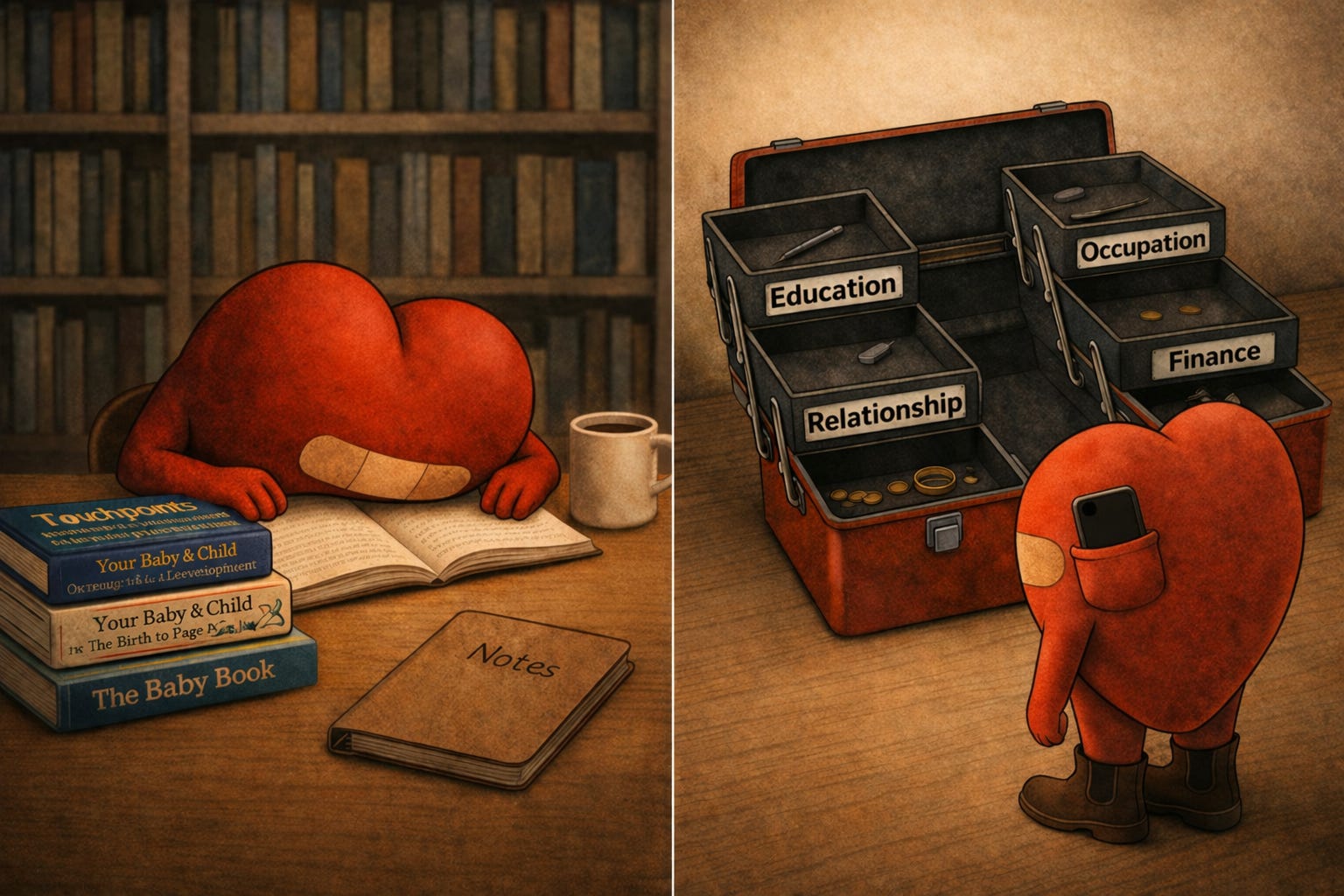
The Parenting Books of Your Time
Parenting advice is almost always a reaction to the generation that came before. For example, parents in the ‘50s read Dr. Spock, relieved that his advice was more flexible and more concerned with the child’s emotional well-being than the behavior-focused parenting they had experienced. By the time the 90s arrived, the number of parenting books on the market had exploded, increasing five-fold compared to just twenty years earlier. Nuclear families had become more isolated from relatives and community, and were turning toward “The Expert.”
The ‘90s Mandate of Constant Attunement
By the ‘90s, the pendulum swung into a high-stakes emotional engagement. We turned to experts who advised a model of “Constant Attunement”—a level of emotional engagement that was both revolutionary and exhausting:
Dr. Penelope Leach recommended reducing our child’s stress at all costs, famously suggesting that stress was “toxic” to their developing brain.
Dr. William Sears introduced “Attachment Parenting,” promoting “maximal responsiveness” as the only reliable path to a child’s lifelong security.
Dr. T. Berry Brazelton taught that parents should be the experts on their own children, tasked with interpreting and soothing the “disorganization” that comes with every developmental phase.
We can respect the intent of these experts while acknowledging the impossible emotional workload their models placed on us. Without family and community to share the load, their call for constant attunement turned into an unintended parenting over-correction —seeking a “soft landing” that inadvertently left both parent and child unprepared.
As we strived to be the “everything” parent, we unwittingly made it difficult for our children to develop their own strengths.
The Resiliency Deficit
Protecting our children from the stress of addressing their own emotional challenges slowed the growth of their own resilience. We fell into what social psychologist Dr. Jonathan Haidt calls “Safetyism”—the currently held belief that to keep children safe, they should be protected from risk.
Haidt argues that human beings actually need risk to develop resilience. Just as our immune systems require exposure to germs to become strong, our psyches require exposure to “stressors” like disappointment, social friction, and minor failure to build resilience.
Resiliency expert Dr. Kathryn Hecht points out, “bravery only rewires the brain when fear is present.” To raise a child who can “handle hard things,” they actually have to handle them. Because we may have over-protected them in their youth, our children didn’t practice developing what Dr. Hecht calls “coping efficacy.” As adults, they are facing a world they feel ill-equipped to handle. Their current need for distance is an attempt to finally find, on their own, the struggle we were advised to protect them from.
The Heavy Work of Separation
When an adult child chooses distance, it can be a powerful, belated attempt at growth. The adult children I talk to often feel a desperation that sounds like this:
“Adulting is hard enough right now, and I don’t feel ready for it. Every time my parent tries to tell me what to do, it just confirms that I can’t do this myself. My parent worrying doesn’t feel like love; it feels like an extra weight I have to carry while I’m trying to navigate my life.”
Modern voices like Vienna Pharaon, MFT, remind us that boundaries are often the only way we find out who we are when we’re no longer being who everyone else needs us to be.
This isn’t a new phenomenon; it is a foundation of human development. Decades ago, psychologist Erik Erikson identified the core task of becoming an adult as the developmental stage of Identity vs. Role Confusion. Erikson observed that without a clear sense of identity—a sense of “I” that is separate from “We”—we have no true sense of self. Because your child’s youth was so supported and “safe,” they may not have adequately developed these capacities while in contact with you.
Grieving the Disappointment in Our Experts
There is a specific kind of moral injury—the feeling of being betrayed by those we trusted—in realizing that you followed the “experts” and it didn’t result in the relationship you were promised.
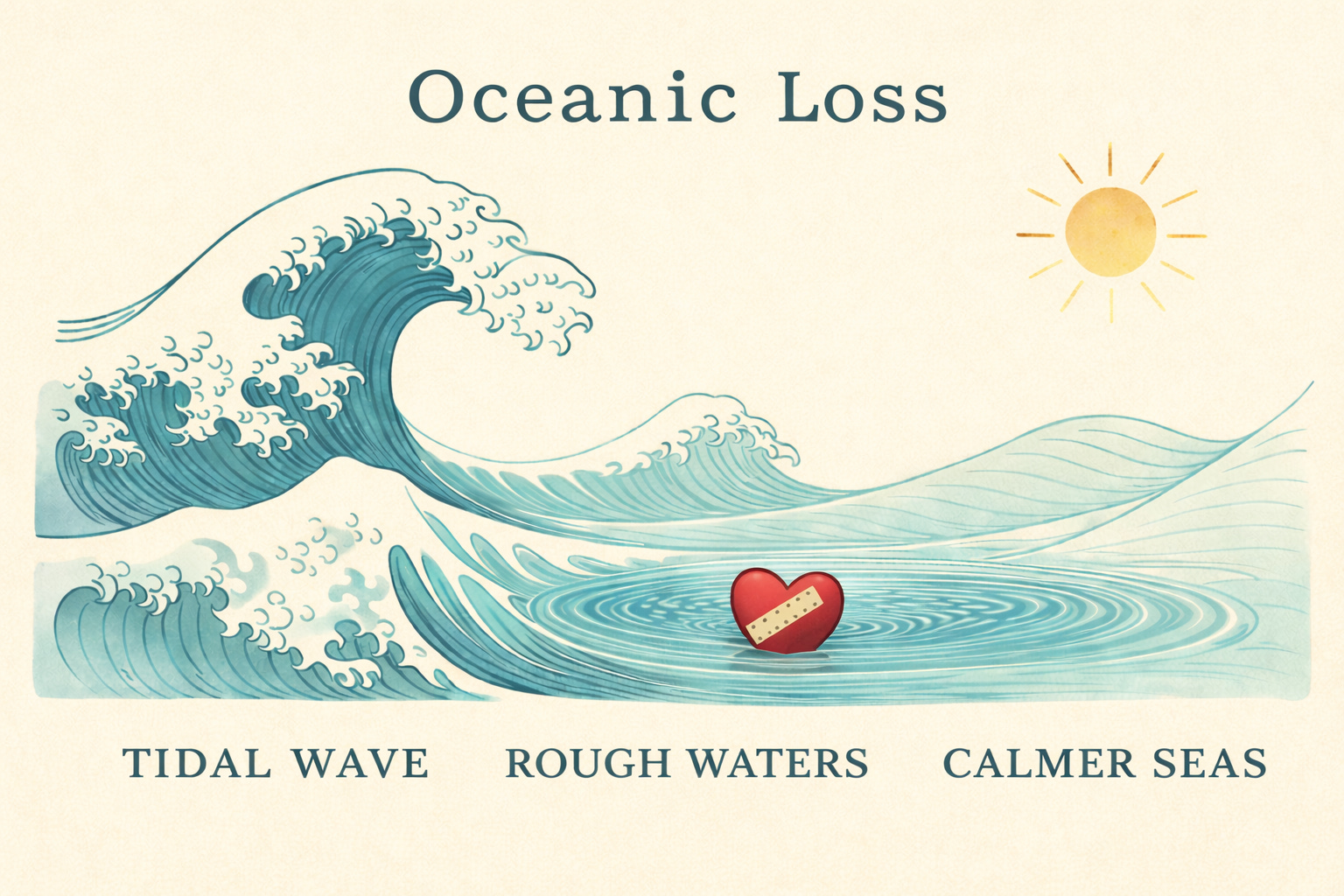
You are currently in the “Rough Waters” of Oceanic Loss. You aren’t just grieving your child; you are grieving the years spent protecting them, only to find that the protection prevented the necessary trial and error required to grow. You would be justified in feeling misled by the experts, but I hope you can be forgiving of yourself. You couldn’t have known that this “devotion” would leave your child needing to learn resilience only after they left home—and perhaps having to leave you behind on that path to accomplish that growth.
Grieving this failure is an important step in your work as an estranged parent. It is part of the ongoing cycle of our own adult development. Failure and resilience, for us, remain the primary ways both we and our children learn from experience.
So, Dear Bewildered,
Unfortunately, I haven’t brought you “good” news about your very hard work parenting. But I hope I have brought you more understanding of the challenges you and your children are facing. You were close and protective. You were told this is what you should do, and it felt right—even good—at the time. You were more loving and protective than your parents had been, likely a promise you made to yourself long ago.
You didn’t know you were limiting your child’s capacity for self-care; you hoped you were bringing them up to feel safe, secure, and successful. Parents and children of all generations face the strengths and weaknesses of the models their parents employed. You hoped to be an exception, but because of the complexity of the parent-child relationship and the never-ending changes in society, your children face challenges you hoped they could avoid. Grief and anger are appropriate as you address the challenge of finding strength and clarity for our current times.
Best,
Kathy
Please contact me at Ksinsheimermft@gmail.com or through the Comments section. This is column # 32.
As a person who does not have children, I found this writing was incredibly eye-opening. Thank you — and thank you to all you parents who were simply doing your best with the information you were given.
This really resonated with me. I have two 80s children and a 90s child. I also felt an additional burden of responsibility for the 3rd child's safety, because of a mentally ill and physically abusive father that we had to escape. I believe that extra effort is what led to this sort of dependency you describe. I wish we could have ever talked about it, but we never talk about what's really going on.