

Dear Kathy,
My husband and I agreed to try to reconnect with our adult daughter. We both wrote Amends letters and sent them to her. She responded by saying she is willing to meet with just my husband, not me. She said her relationship with me is too “toxic,” so she just wants to sort things out with her dad.
I am so confused by this and really hurt. She and I were close before the estrangement, and now she is acting like that wasn’t the case. Plus, I was her primary parent. She seems to be preferring my husband now, which I find incredibly painful. On top of that, he seems excited by the possibility of reconnecting with her and isn’t very able to take my feelings into account.
I know I should be glad she wants to be in touch with us at all, but instead, I feel spun up, hurt, and worried. What if they form a pair and never include me? How will I handle my anger, sorrow, and humiliation?
— Angry and Upset
Dear Upset,
Your situation is both very painful and not uncommon. In my work with estranged families, it is frequent for a child to state a preference for reunifying with only one parent. Given your dedication earlier in her life and the closeness you shared, this adds a sharp, personal sting. It feels like a rewrite of your history together.

Reconnecting with Only One Parent?
I generally recommend trying to reconnect with one parent if that is what is offered. It can help your family feel more connected and ensure that you can provide care for your adult child if help is needed. However, it isn’t easy going because the imbalance is tough. Parents can feel pulled in different directions, and jealousy can erupt in the couple.
The Adult Child’s Perspective: Finding a “Safer Haven”
When an adult child reaches out to only one parent, it is often an act of profound vulnerability. Through their lens—and based on their unique memory of their history with both of you—one parent may simply feel more comfortable or less emotionally “charged” at this moment.
If you were the “primary” parent or the one with the more intense emotional bond, the stakes of reuniting with you might feel too high for them right now. Reaching out to the other parent is your child’s way of testing the waters. It isn’t a judgment of your worth; it is their finding the safest shore to land on as they navigate the Rough Waters of their own discomfort.
What Does “Toxic” Mean?
In estrangement, the word “toxic” can mean “too difficult” or “too painful.” You may hear it as a condemnation, but instead, think of it as a way to say it’s been too hard to connect with you. It signals that, currently, your child doesn’t feel they can be comfortable in your presence.
Your adult child may feel they have explained difficulties to you and that their perspective was either not understood or rejected. While this feels like a door slamming, try to view it as a piece of data about where the work needs to happen when things eventually move toward Calmer Seas.
For Your Couple: Navigating the Rough Waters Together
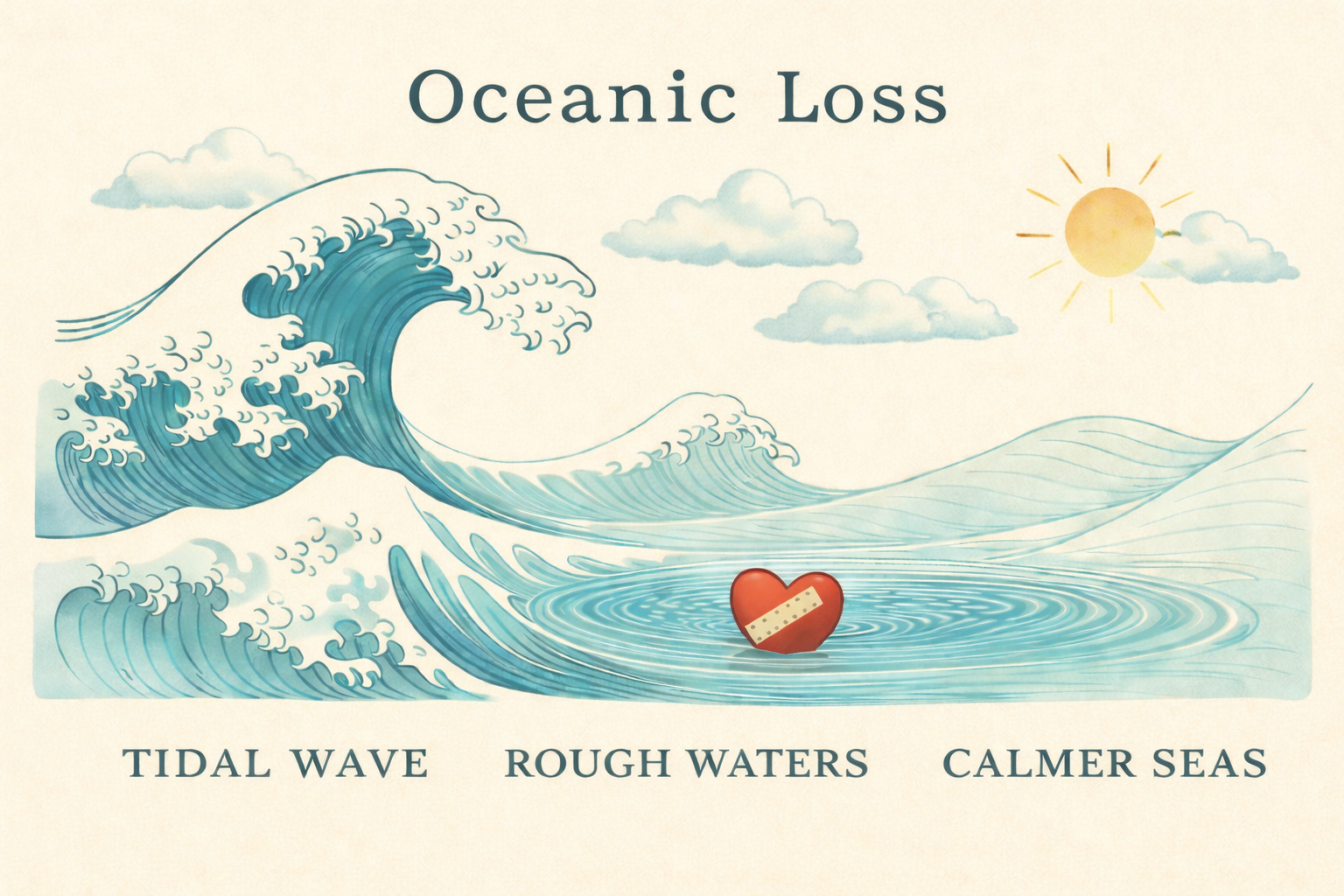
It will take deep work on your part to support your husband and daughter trying to reconnect. You will likely cycle through each stage of grief in my Oceanic Loss model more than once. The initial news probably put you back into a Tidal Wave; now, you are in Rough Waters.
In the world of estrangement, things can feel “topsy-turvy.” Know you are not alone in feeling you have fallen down the rabbit hole. Your child may only be able to start with one parent at a time, choosing the less intense relationship as a starting place, not an ending place.
Here are some ways you and your husband can make a plan to support each other:
The Connected Parent’s Role: Talk together about parameters for your husband’s conversation. He doesn’t need to “champion” you or defend against her—that might cause her to retreat. Instead, he can be a neutral “bridge.” If she complains, he can listen without participating in the “splitting.” He can say, “I hear that’s how you’re feeling”, while staying connected to you as his partner.
The Importance of Transparency: Agree that there will be no secrets. "Secret" lunches or texts create distrust in an already precarious and painful time for you as a couple. Knowing what is happening—not just the facts, but how it felt—prevents the fear that they are “forming a pair” to exclude you.
Protect Your Partner Bond: Plan a “debrief” time for just the two of you after your partner meets with your child. This is to reassure both of you of your importance and value to each other as partners and to reconnect emotionally.
Alert and Use Your Support System (Put on your Life Jacket!): Humiliation thrives in silence. Use support groups, individual therapy, and trusted friends. When we feel humiliated, it’s hard to feel deserving of compassion and self care, but this is exactly when you need it most. Tell a friend to drag you to yoga or on a morning walk—things you know you like to do but may not feel motivated to do during this time.
_____________________
So, Dear Upset,
Know that you are valued, loved, and cared for, even when you are not being included by your child. Continue with your routines and self-care practices that help you feel good about yourself and your life.
This is a difficult phase of estrangement, and hopefully a stop along the way, not a permanent destination. Make sure when others offer you love and support, you do your best to receive it.
Best wishes for navigating your challenges in this phase of your journey through Oceanic Loss,
Kathy
Please email me Ksinsheimermft@gmail.com or connect through the Comments section
This is column # 30.
My husband and I have discussed this exact scenario, and if it were to happen, we would not reconnect with our adult child. The pain that it would cause the other spouse and the strain on the marriage would not make the reunification a healthy one. I could see it in the event of one spouse being abusive, but that is not our situation.
I do not know how to reconnect with my daughter. I experienced a catastrophic illness - she did nothing to help- & then said she was "taking a break" -I haven't heard from her in 12 years. Reached out several times- she & her husband are college professors. I have nothing to make amends for - paid for her Ivy League degree - I was a very good parent, no issues until I got ill.