

Dear Kathy,
Our daughter has gradually withdrawn from us. We only hear from her when she needs help with her children. Last year, she let us know she needed to limit contact. We wrote Amends letters, which led to her revealing she has a psychiatric diagnosis of PTSD with “triggers” that require her to take space from us. She has let me know that I am one of those triggers. Since then, I let her control the situation whenever we are in contact.
I’ve started to wonder if I’ll even want to reconnect if she ever lowers her boundaries. I am so hurt and sad, especially since I never did anything to intentionally harm her. In truth, we were very supportive parents! What is your advice?
— Confused, Hurt, and Looking for a Compass
Note on Safety: I want to acknowledge that in some families, children are mistreated and require protection. In those cases, distance is a vital tool for safety. The following advice assumes that abuse has not occurred and focuses on the complex emotional dynamics that can still lead to deep family pain.
———————————————
Dear Hurt and Seeking Direction,
It is upsetting and confusing when a relationship you remember as loving and connected is suddenly redefined through sharp words like trauma, triggers, and taking space. When you’ve spent a lifetime trying to be a devoted parent, being told you are now a source of distress feels less like a dialogue and more like a barricade.
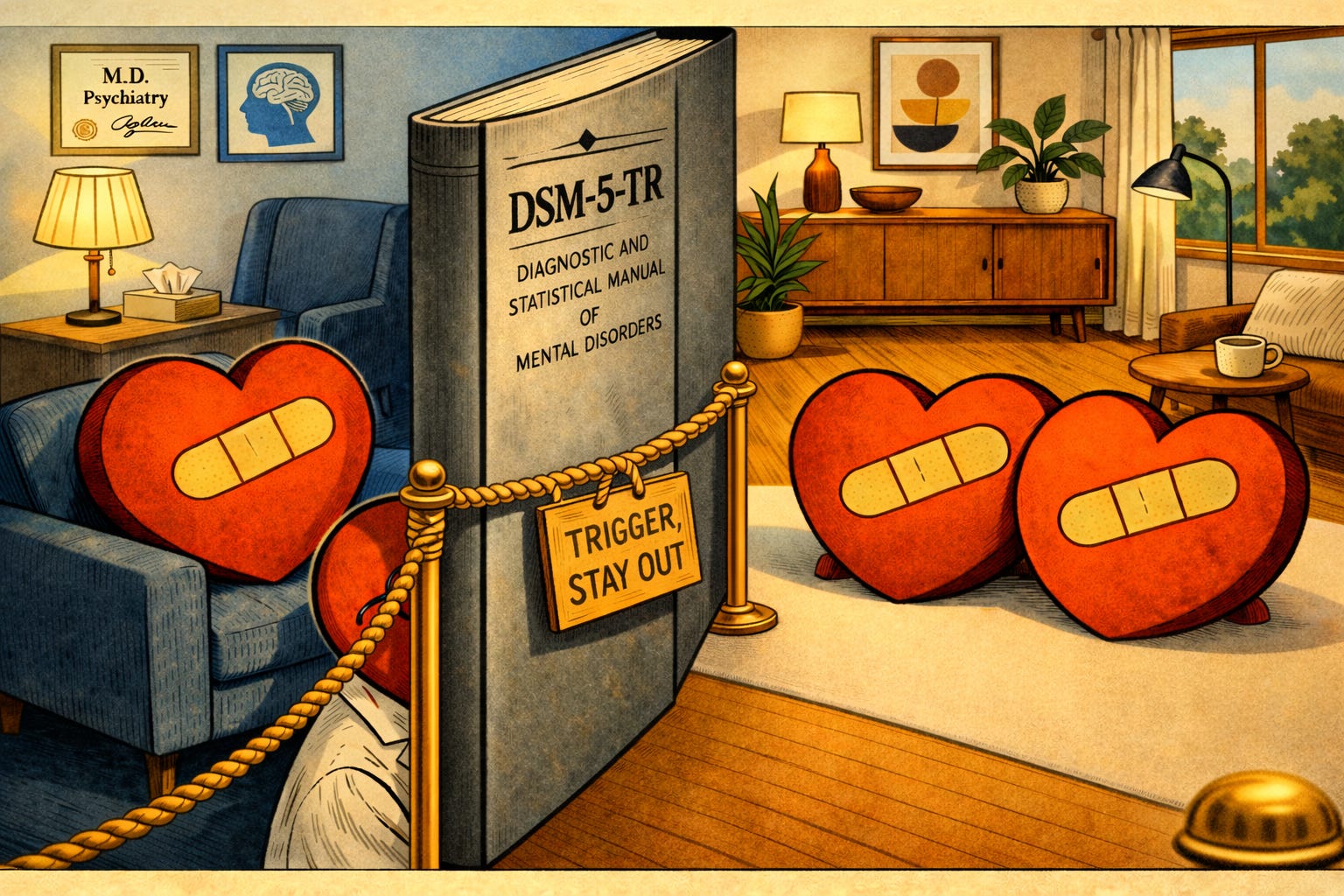
The Gap Between Intent and Impact
You are very clear that you never intended to hurt your child. But in family dynamics, intent and impact can differ dramatically.
Consider a parent who insists a child stay on the baseball team to teach “stick-to-itiveness.” The parent’s intent is to build character and resilience—acts of support and love. But the impact on the child is a feeling of being trapped and unheard. Imagine that, in addition to the discomfort of the game, that child was also being bullied at practice but felt they couldn’t tell you. In this scenario, your “support” unintentionally became an enforcement of their suffering.
You weren’t a “bad” parent; you simply didn’t have a full understanding of their internal world at the time. You were standing on the sidelines cheering, while they were struggling with an internal experience you couldn’t see.
The “Two Things are True” Tool
Dr. Becky Kennedy often speaks about the concept of Multiplicity. It is the powerful idea that two seemingly opposite things can be true at the same time. In your case:
It is true that you were a deeply supportive parent.
It is true that your daughter experienced parts of her upbringing as painful or “triggering.”
One truth does not wash away the other. Accepting her reality doesn’t mean you are admitting you did something “wrong”; it means you are acknowledging that you were sometimes experiencing her growing-up years in very different ways.
The Diagnosis as a Survival Map
When your child made an appointment with a psychiatrist, she was in distress. Just as we visit a physician for physical symptoms we can’t treat ourselves, she sought a professional to help her find a path toward feeling better. Based on that consultation, she has reached a conclusion: to manage her triggers, she currently needs to avoid contact with you. While this feels like a deeply unfair verdict on your parenting, it is her current strategy for survival.
When a child shares a psychiatric diagnosis, it can feel like a final judgment on your life’s work. However, if we look for the Most Generous Interpretation (MGI), we see something different. The MGI is that your daughter isn’t trying to punish you; she is trying to survive her own symptoms. Her diagnosis provides a framework for her internal emotional experience—a way to name a struggle she has likely carried in silence for years. Interestingly, your Amends letters may have actually provided just enough safety for her to finally name that pain out loud to you. She isn’t attacking you; she is trying to stay afloat, understand herself, and heal.
Understanding the “Trigger”: Your Child’s Internal Experience
While we don’t have the specific details of your daughter’s history, we do know the nature of a PTSD diagnosis. For someone in her position, the world often feels like a series of loud, unpredictable alarms. When she speaks of being “triggered,” she is describing a moment where her nervous system has been hijacked by a memory of past pain.
These feelings are powerful, overwhelming, and often last long after the interaction has ended. In those moments, she likely feels out of control. Her decision to limit contact isn’t necessarily a commentary on your current behavior; it is a desperate move toward self-regulation. She is trying to turn down the volume on a world that feels too loud to handle.
As she works through her treatment, her strategies for staying safe may change. Right now, her boundaries feel extreme and painful to you. However, it may help to assume she is doing the very best she can to manage a profound amount of internal suffering. Seeing her withdrawal as a health strategy rather than a personal rejection may be the first step in finding a way forward for both of you.
Finding Your Way Forward
After you have taken the space you need to breathe, here are some things to consider:
Compassion for Yourself and Your Child: You have been identified as a cause of the hurt you spent your parenting life trying to prevent. That is a profound grief. Ask friends and family to remind you of the loving parenting you did. It is okay to hold onto your memories of being a good parent even while she navigates her healing. Know that your child is hurting, and understand that she is doing her best to take care of herself and her family.
The Bridge of Grandchildren: Your daughter’s willingness to trust you with her children is a “silent” vote of confidence. It suggests that she still views you as a safe harbor for the next generation. If you can bear it, continue to show up for them. Their love, and you showing them love, can help you feel valued during this period of distance.
Validating Your Fatigue: You asked if you will even want to reconnect. This is an understandable question. Being seen as “the trigger” is exhausting. It is okay to protect your own heart and take some space to gather yourself. If you can find some psychic rest, your feelings may rebound, and you may find you can join your daughter in her journey later on.
Narrative Humility: Seeing yourself through your child’s eyes is painful, but it offers a rare chance for repair. If she eventually explains her triggers, try to listen without needing to correct her. The growth opportunity here is to see her perceptions not as “the truth,” but as her truth. As part of this process, you may also come to understand yourself in new ways as you grow alongside your child.
So, Dear Hurt,
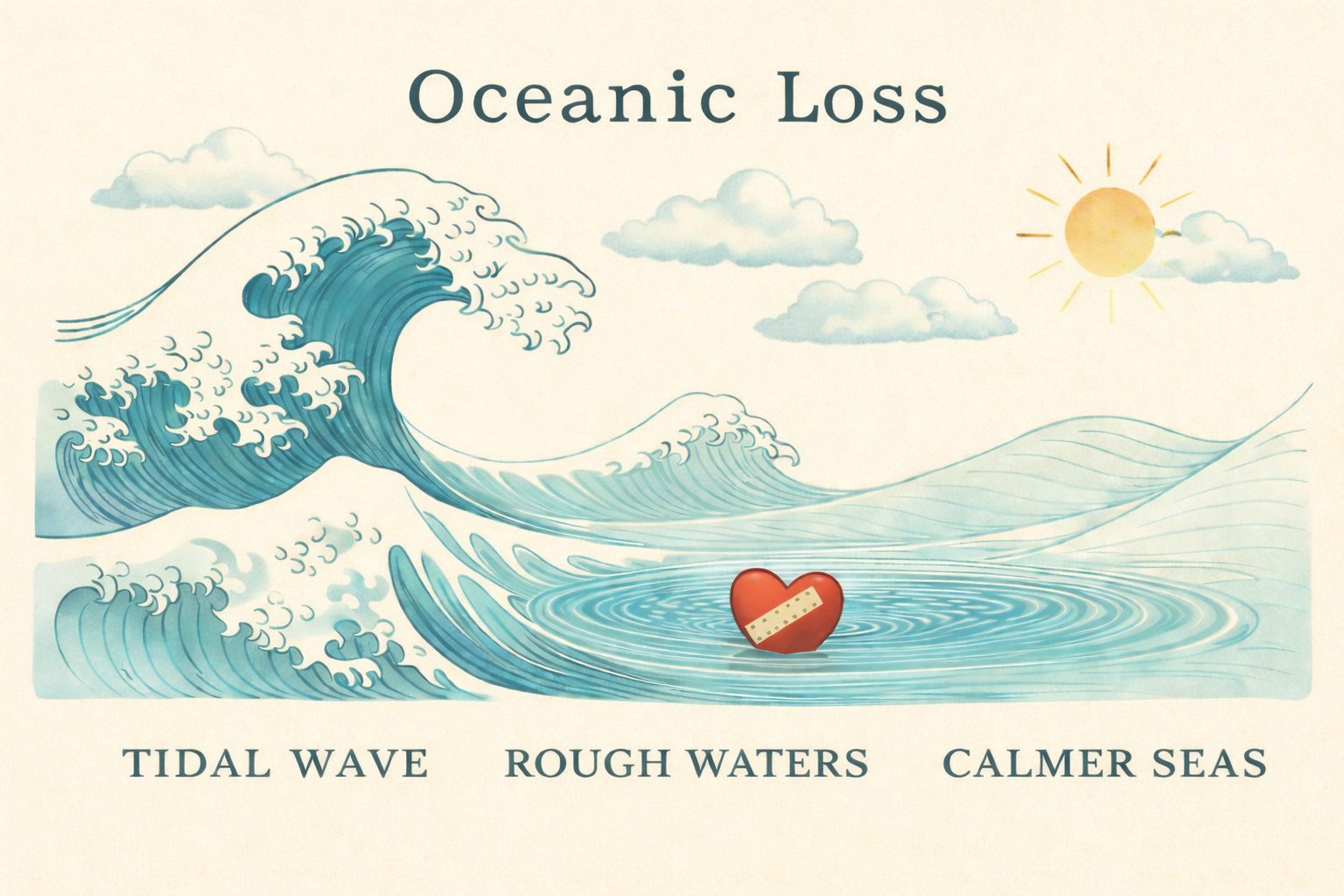
This is a painful juncture, and you do have choices. If you are able to learn more about your daughter’s situation, it may present a growth opportunity—if that is what you choose. You may also choose to step away. You are definitely in Rough Waters with this decision. The choice isn’t an easy one, but it is yours. While you weigh these options, be sure to employ effective self-care strategies and consult trusted others for their perspective.
Kathy
Please reach out to me: Ksinsheimermft@gmail.com or in the Comments section.
This is column # 31
Since my daughter was 14, I have asked her to go therapy and address issues she had with me...She did not open to the therapist. As she got older, I offered her many times to go to her therapist or one that she picked for us. She always said she had other priorities. Six years ago she cut me off. She was so hostile she picked me up from a trip, during which she insisted on dog sitting and got my dog injured by bringing him around a known aggressive dog. I did not reprimand her or anything, I just said treat him (he had had a lot of surgeries and I had said no more anesthesia; just one ex). Since she had borrowed my car, she picked me and friend from the airport. Mind you I never said anything, I was not thinking about it after the 1 AM phone call to Europe.
i do about exposing my dog and was acting normally at me return. She emanated so much hostility that my friend refused to come int her apartment when I went to get the dog.
My point: I have given her heart felt apologies (before no contact) wrote her letters and agreed to her choice of therapist. NY eave 2019 she said she wasn't available. No contact outside of a brief time when I could not even say ho are you because that was intrusive. She is 34...she had made choices as an adult and teen. She told my sister she loves me. Sorry but that is bull. You don't treat a parent who has admitted to faults and wants to work on if. Subsequently, she turned my other daughter against me 18 mos ago and that daughter has now re-interpreted her life to align even though for the first five years she told me she disagreed. I believe daughter one groomed daughter two and when that daughter became upset with me in the present she seized on the issue to flip her (any my sister who she has seen three times in 10 years) and my son in law who I had a loving and giving relationship with. and D2 won't let me see my beloved grandson who said I was his favorite.
So I am very frustrated with these kids who are willing to just give up a devoted loving parent. They are not upset with dad who barely saw them and didn't offer and help after they were 18.
Trigger or no trigger, there has to be some willingness on their part and I do not accept that I "deserve" such treatment. D1 once said to me, with condensation, "i know you did your best" but unsaid was it just was no good. Well, she took 5% and turned it to 100%.
I am an active person and I do many things and I still think about them daily, especially D2 who I was very involved with her family until very recently
Well said. There are often two truths to a situation. It is what happened viewed through two differing lenses. I never cut contact with my parents for the sake of my children, but the truth was I was triggered after every visit (of a couple or more days) & I suffered mentally & physically after every single visit. My parents would not have had a clue if I tried to explain the situation to them. My mother was always right, never said sorry in her entire life & her “view” was the only view.
So, it’s not BS nor someone twisting a situation. There is validity in what her daughter is experiencing and she is courageous enough to speak up for herself. Bravo to her. And I hope in the future she will have healed enough to be open to more interaction.