Dear Kathy,
When I was little, I had a security blanket. I carried it everywhere--it even got dirty and smelly, and I didn’t care. (I think my mother did, but I remember that, for me, even the smell was reassuring). Why do these help a child so much? It helped me feel safe in the world--I even took it with me to kindergarten to help me go to that big, new school. Is there anything like that I could use now to feel less upset in my estrangement? I feel just as lost as I did then.
Lost, Scared, and Wishing for Security
Dear Lost, Scared and Wishing,
That blanket held so much for you! It represented the security of home, your caregiver’s lap, your safe space. Carrying it with you helped you move out into the world feeling more secure. Eventually, we leave our security blankets/stuffed animals/special objects behind and feel more secure inside us. This is a process that takes time, effort, and learning. The British psychoanalyst Donald Winnicott named our special security possessions “Transitional Objects”, as they helped us transition from our homes out into the world.
“A security object gives our nervous system a physical bridge to hold onto when we have to step out into an uncertain world alone.”

We all function better in our lives, in the world, when we are feeling secure. When we are centered enough to think, act, be effective. Estrangement challenges our center, our sense of effectiveness, so we would benefit from re-finding our security blanket and holding it close.
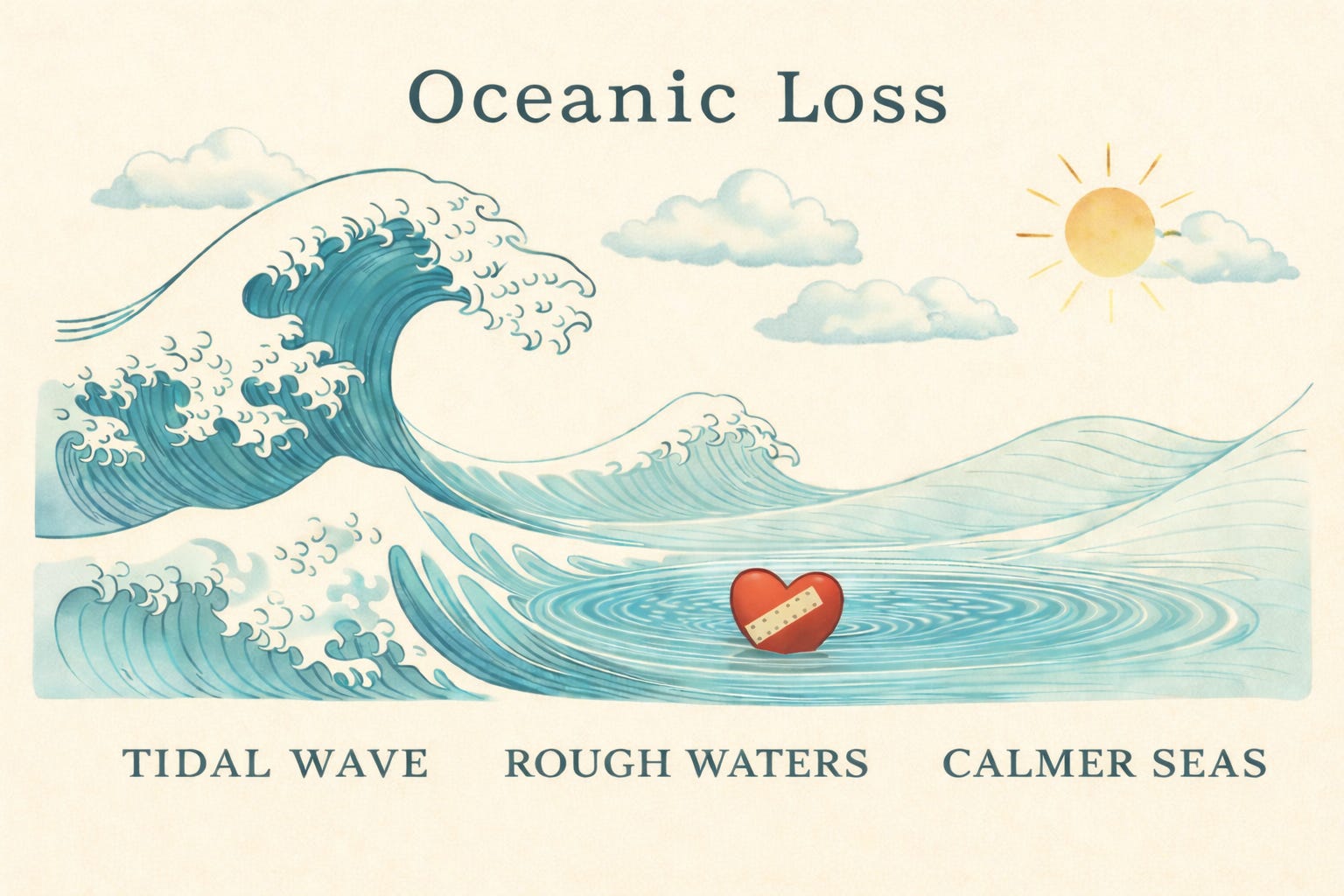
Where is the reassurance of that special object now, as you feel buffeted by the Rough Waters in estrangement and want to feel safe again? What are some of those tough feelings you are trying to navigate? Shame, Hurt, Longing, Insecurity, Loss?
Some Parts of Feeling Lost, Ashamed, and Upset That Make It Harder:
For so many years of your life, your relationship with your estranged loved one was part of who you knew yourself to be. Without that relationship, you feel a hole in yourself—even in who you are. I am my child’s mother; I am my bestie’s friend; I am father’s child. Our identity grounds us. Without those important connections, we can feel unmoored.
You don’t know what to do with your hurt. You feel upset with the person who estranged you, yet you still feel drawn back to them. This is a real push-me-pull-you situation. It can be dizzying, leaving you feeling disoriented and insecure.
You want to ground yourself, but you can’t find the resources to do that. When you are disoriented, it’s hard to find “North,” or grounding, or a helpful direction.
You feel shame, leaving you feeling like you don’t deserve care. So you withhold comforting yourself. Then, you feel stranded and uncared for—painfully doubly abandoned.
Where Does a Secure Feeling Come From for an Adult?
If you had a security object as a child, something similar may be helpful. In one household, where the adult had a security blanket as a child, she cut a small piece of similar-feeling blanket to carry in her pocket. Another family member liked this idea, and placed a small blanket piece in her pocket, too. Since the texture is part of what helps with feeling secure, rubbing the blanket piece in their pockets helps them relax.
This isn’t just a childhood phenomenon—many of us carry these attachments for life. (I still have the teddy bear I got during my tonsillectomy at age 3!) Adults quietly keep their childhood security animals tucked away, pulling them out for sleep and comfort during difficult times.
Adults can find ways to anchor themselves when the emotional pain flares up. For instance, one client uses a heart-shaped hot water bottle on her upper chest—right over her heart—for weight and warmth when her heart hurts. Another adult relies on a whale-shaped weighted stuffie, placing it on her body to provide grounding pressure when her thoughts start racing.

There are adult security objects that you might find helpful. Here are a few ways to reclaim that comfort now, without shame:
Therapeutic Weighted Plushies: The modern equivalent of a heavy childhood quilt or a comforting animal. Resting a weighted stuffed animal against your sternum provides deep pressure stimulation, which helps slow a racing heart and signals your vagus nerve that the crisis has passed.
Comforting Textures: Consider a piece of soft wool blanket, or even a small square of silk kept in your pocket. The touch of these textures can convey a message of self-care through your skin.
Warmth and Softness Combined: A classic rubber hot water bottle encased in a faux-fur or knitted sleeve, or a microwavable warming pad can bring relief. Pressing warmth against your chest or belly counters the physical sensation of grief and invites your lungs to expand.
Prioritizing Self-Care and Routine: Self-care is a challenge for many of us. Finding that routine, and then keeping it, can be tricky. In one of today’s drawings, the bandaged heart is sitting with their cat and blanket in a quiet place. They may be practicing a grounding exercise of counting their breaths, or listening to music that they find calming. In the later drawing, the bandaged heart takes a comfort blanket along to the store, keeping it close by.
Key, here, is keeping in mind that feeling secure will help you navigate your estrangement. You may often not feel good, even at sea, but when you look to find your anchor, you will have some practices at hand that will help you.
______
So, Dear Lost, Scared and Wishing,
Remembering to comfort yourself when you are hurting can be tricky, but will help. You deserve to feel comfort in this painful time. A security blanket may be a wise choice—please, have one on hand in case you need it!
Best wishes comforting yourself,
Kathy
Please reach out to me in the Chat, Comments Section or at ksinsheimermft@gmail.com
This is column #56