

After yesterday’s column on Healthy Boundaries, I heard from several of you with the same important question: “What does a healthy boundary actually sound like in real time?”
It is one thing to understand the need for a healthy boundary; it is another to state and hold the boundary when the emotional pressure is on.
The Basic Principle of Healthy Boundaries
If your “boundary” requires the other person to fully understand it, agree with it, or like it... it’s not a boundary. It’s a request.
A boundary only requires ONE person to act: You. You are the one who ends the call, the one who changes the subject, and the one who walks out the door to protect the relationship from the “veering off” that leads to cutoff. You hope for the cooperation of the other person, but the boundary does not depend on it.
To help you move from theory to practice, I’ve put together a list of Healthy Boundary Suggestions. These are the specific suggested scripts and actions to help you maintain your connection without losing your ground.
The Goal: To stay in the relationship without losing yourself.
1. The Core Philosophy: “Two Things Are True”
Center yourself with this mantra:
“I can be a loving son/daughter/sibling/friend AND I can say ‘no’ to this request. The other person’s disappointment does not make me a bad person.”
2. The Scripts: What to Say and What to Do
The Endless Phone Call (Protecting your energy)
The Script: “I have 15 minutes to talk today before I have to go. I’ll check in again on Tuesday!”
The Action: You say good by, making it clear you have to go, and hang up when the 15 minutes are over. Don’t wait for the other to be able to end the call.
Topic Trespassing (Protecting the peace)
The Script: “I’m not going to discuss [sibling/politics/money]. Let’s talk about the kids or your garden instead.”
The Action: You stop responding or change the subject if the other person continues. Repeat your limit once, maximum, if you feel it might help. If the other person continues to talk about the restricted topic, you end the call.
Unrealistic Favors (Protecting your autonomy)
The Script: “I know you’d like me to [fix the roof/give money/solve your problem for you], but I’m not able to do that. I can help you look up some local resources, though.”
The Action: You do not provide the labor or the funds, regardless of the pressure.
The Guilt Trip
The Script: “I can see you’re upset that I’m saying no. I’m going to step away so we don’t argue, but I love you.”
The Action: You leave the room or the call immediately to prevent a blow-up between you.
3. The Boundary Maintenance Checklist
If your parent “pushes”, remember:
Don’t Defend: You don’t need to explain why your “no” is a “no.” “Because I’m not able to” is a complete sentence.
The Broken Record: You may wind up stating your boundary repeatedly (over time). See this as a reminder and reinforcer for both of you of the boundary.
Exit Early: It is better to have a 5-minute pleasant call than a 20-minute call that ends in conflict.
4. Navigating the “Rough Waters”
Setting a boundary may trigger a return to Rough Waters in Oceanic Loss.
You may feel:
Grief: For the parent/friend, etc. you wish could respect your limits on their own.
Fear: That they will now cut you off or try to punish you because you said “no.”
Guilt: For taking the authority role from a parent by setting limits when the typical role is that a parent sets limits for a child. In the post yesterday, I referred to this as “Upside Down”.
The Strategy: When these feelings hit, call in your “Support Crew” (partner, siblings, or friends) and remind yourself:
“This is understandably uncomfortable. I am trying boundary setting because I want to stay in contact. I am doing this for myself and for those I influence, such as my children.”
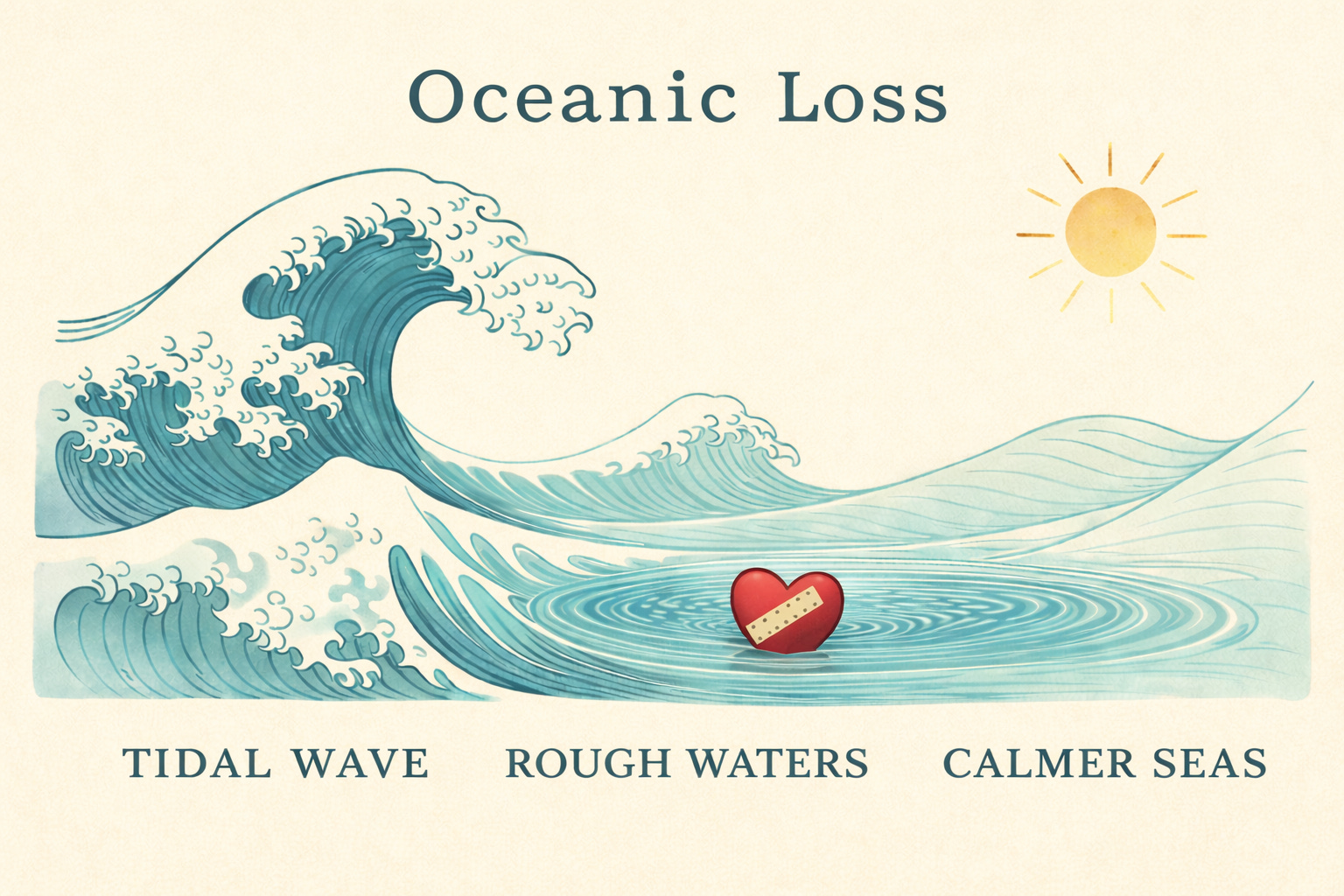
Support for Keeping Going
You have taken the bold step of learning to set healthy boundaries and are bearing the discomfort of changing the dynamic in your relationship. Self care and respect are key here. Best wishes for receiving the support you need and for a successful, healthy change in your relationship.
Please contact me through the Comments section or my email: ksinsheimermft@gmail.com
Read it and it seems like it’s adult child driven
These boundaries used by a parent of an adult child are taken personally by the adult child. Since the adult child holds the power it results in further rules or ultimatums. At least this has been my experience.