

Dear Kathy,
We have been estranged from our son, his wife, and our two granddaughters for over 11 years. Looking back at the beginning of that separation, we still wonder what activated the “flamethrower” he directed at us.
While we have finally established respected guardrails after years of trial and error, we deeply wish we’d had your advice at the start. It would have saved us so much sorrow, guilt, and the mistakes we made in our approach to processing what was happening to our family. We realize now that our first step should have been to stop standing in the path of our son’s “flame-throwing.”
Can you offer specific advice for parents on how to avoid or minimize that initial damage and the power struggles that follow?
— Regretful, Sadder but Wiser, With Guardrails
Dear Regretful,
Thank you for your vulnerable letter. Years of estrangement are deeply painful, and the inflamed response you describe—what often feels like a “flamethrower” at the start—is an emotional firestorm experience that few understand unless they have stood in its path.
When I use the term “flamethrower,” I am referring to the fiery, angry words that erupt from a state of deep dysregulation. If you are in fight-or-flight, you have no perspective—only raw, upset, scared, and angry feelings. Because the shock of estrangement feels like an emergency, the amygdala responds to the perceived danger by flaming up—spewing raw emotion and reactive words.
Most often this inflammation is rarely one sided. When you hear the words “I am cutting you off,” your own alarm system is likely to ignite. The sudden pain of that rejection can send you into your own state of fight-or-flight, causing your “flamethrower” to reignite in return. It is incredibly difficult to maintain a “low-heat” presence when you are shaking from a survival-level threat to your connections with loved ones.
My suggestions for the early stages of a rupture aren’t intended to imply you did something “wrong.” You probably responded as you had as a parent, with typical parental authority: making requests, setting boundaries, and communicating expectations. When your child feels the need to estrange, however, these techniques are rarely helpful. You will need to access the internal space required to catch your breath, allowing you to fully take in and respectfully respond to what your child is telling you. The roles have really switched, and you are called upon to switch with them.
A Change in Who is Piloting
When a younger child needs guidance, parents can step in with parental authority. Dr. Becky Kennedy uses the image of the parent taking over as the pilot. There are times the younger child can’t be flying the plane because they are not making good choices.
When adult children take space, they are piloting the plane without our guidance. Whether or not parents think an adult child is making good choices, they are now the pilot of their own plane.
If parents try to assert parental authority during this time—even out of a sincere desire to help—it can feel to adult children like a high-altitude hijacking. They may react with an “inflamed” intensity because they do not feel listened to or understood. Stepping back isn’t “giving up”—it’s the most important act of love you can offer: recognizing that they are now the navigator of their own life.
How Childhood Has Changed
Adult children today face challenges that were unanticipated thirty years ago. As developmental psychologist Peter Gray (a research professor at Boston College) and social psychologist Jonathan Haidt (a professor at New York University) suggest, the shift toward a more digital childhood changed the traditional training grounds for face-to-face negotiation.
Your adult child’s communication methods are different from yours—they are shaped by growing up with digital communication and its powerful component—cut off. When an adult child reaches for cutoff, it is often a sincere, self-protective measure. Cut off is a communication they grew up with. For them, distance isn’t seen as a weapon; it’s a self-protective way they feel they can regulate an inflamed nervous system and find the safety they need to grow.
The Gayle King Paradox: Intent vs. Impact
We saw this dynamic recently in a cultural moment when Gayle King asserted that if her children ever estranged her, she would sit on their doorstep until they spoke to her.
To a parent, this sounds like appropriate use of parental authority and unwavering devotion. But to an adult child who is sincerely trying to protect their own psychological health, that same act can feel like an intrusion. It signals that their boundaries don’t apply because the parent is still trying to be the pilot. When we push against a boundary, it often triggers further inflammation, confirming the child’s fear that the only way to be “heard” is to move even further away.
Recommendations for Early Estrangement
Early Estrangement is an experience of painful imbalance. These recommendations are designed to help you center yourself while developing a new, respectful understanding of your child’s perspective.
Listen to Your Child’s Perspective: When your child voices concerns, do your best to take them in with respect. Look for the truth in what is being said and make adjustments. They are watching to see if you can respond to their requests without reverting to parental “limit setting.” You may be under a microscope for a bit: parents often feel “eggshell-y” in this phase, while adult children feel cautious and on guard.
Be Curious, not Judgmental: If you have the opportunity for conversation, listen, being sure you understand. Say back what you have understood, checking to see if you “got it.” Ask for clarification if you are unclear. Ask “Is there more?” to hear further elaboration of what your child wants you to understand. Invoke your curiosity in order to better understand your child.
Respect Boundaries: If they ask for space, or to meet only in neutral, public places, honor that boundary. I recall one parent whose child would only meet outside. She brought extra layers of clothing and didn’t try to alter the plan. She knew that meeting on her child’s terms was the highest value—it showed she was willing to prioritize their comfort over her own authority.
Transition from the Pilot’s Seat: You are moving from a role of authority to a role where your child is fully in their pilot’s seat. This transition brings up many feelings, and it is best to process those with trusted friends, a support group or a therapist. Your child is doing the best they can to differentiate and likely doesn’t have the bandwidth for your pain right now.
Accept Differing Realities: If they present a version of history that doesn’t match yours, try to understand the feeling behind what you are being told. Validating their experience doesn’t mean you have to “agree” on every fact; it means you are prioritizing the relationship over the need to be “right.”
Assume They Still Care: Usually, it is the relationship dynamic they are struggling with, not you as a person. Many adult children express that they love their parents, but simply cannot maintain their own psychological health while remaining in the current dynamic. They are taking this step away because they are sincerely trying to figure out how to build a healthy, sustainable life.
Summon Compassion for Everyone Involved: When a family member or friend takes space, it is because they are hurting. These boundaries—whether they manifest as silence or new rules for contact—are established for emotional safety. Offer understanding where possible, and hold compassion in your heart for yourself as well as your loved one. You are both hurting, both confused, and both wishing for a sense of security. The new boundaries are tools to help, hopefully temporarily, as you find a steadier path toward better relating.
Finding the Way Back
So, Dear Regretful, Sadder and Wiser,
Thank you for asking this on behalf of those just beginning—for the guidance you wish you had had 11 years ago.
As you look in your rearview mirror, I would appreciate hearing how these ideas resonate with your experience. Please share your own advice; your journey will undoubtedly help others find their footing.
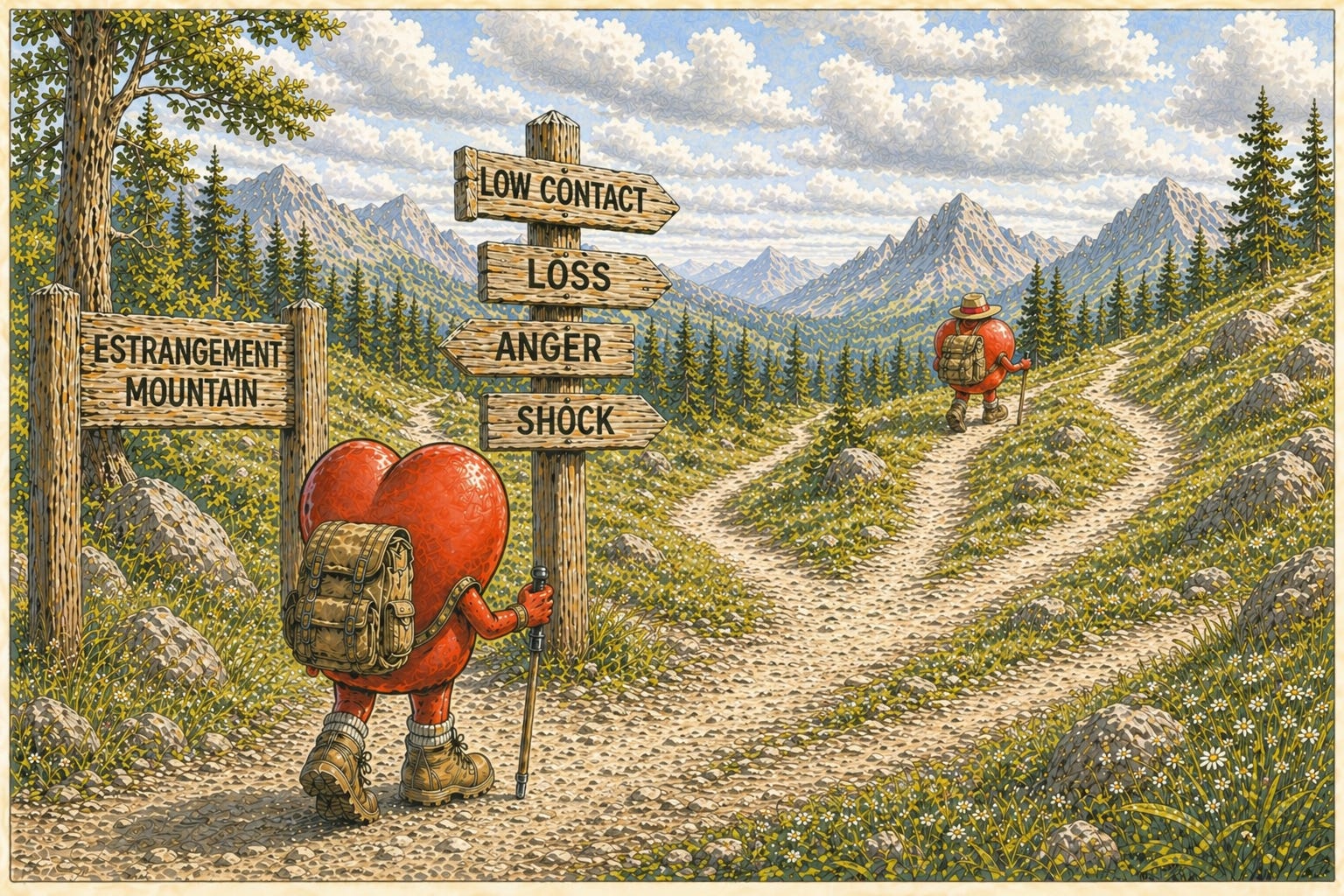
It is deeply painful—often shocking—to be suddenly estranged. When you were reeling, you naturally hoped to course-correct, but the trail map you were using didn’t have helpful coordinates for this new terrain. It is understandable that, for awhile, you wound up further off-course than when you started.
I am glad you have found your way back to a place of stability. While “guardrails” and “eggshells” may be the norm for now, there is always the possibility that future conversations—rooted in new understanding—might pave the way for more closeness. Learning to be together, to talk together, and to resolve differences takes patience, trial and error, and above all, time.
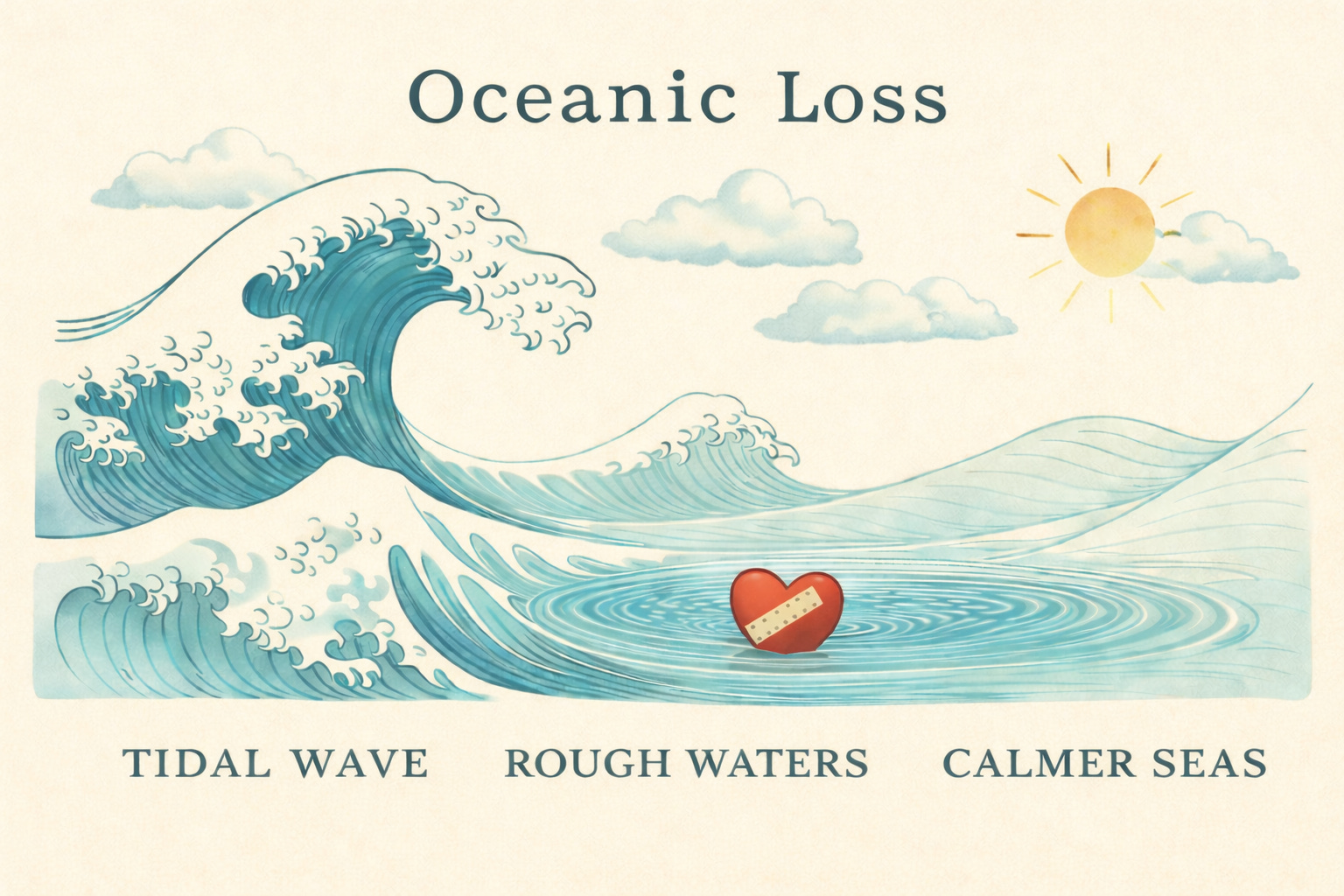
The Bottom Line: You cannot control an inflamed response in another person, but you can modulate your own response. Stepping back or aside is an act of profound respect—it preserves the possibility of a future bridge once the Calmer Seas return.
Best,
Kathy
Please reach out to me at ksinsheimermft@gmail.com or through the Comments section.
This is column # 36
Great thought to step aside from the path of the flame thrower.