

Dear Kathy,
I spent these past few months dreading Thanksgiving. I wanted to be with my stepdaughter, her children (our grandchildren), and, of course, my wife. But my stepdaughter began shutting us out over the summer, and her chilliness increased with the season. I even started attending meetings for estranged parents, hoping to find a way back to warmth.
As the holiday approached, my worry escalated. The idea of being with her seemed unbearable because she was treating us so badly. Yet, the idea of not being with her also felt awful. I wanted tradition, familiarity—basically, I wanted the past.
Then, we received another invitation. Not from family, but from good friends. Hearing their offer, I finally felt welcomed and wanted. The panic subsided. We accepted, brought a favorite dish, and had a good time.
Now, I feel a mixture of emotions. I am glad I didn’t submit to my stepdaughter’s poor treatment, but I am lonely for her and our grandchildren. I worry about the loss of the future I thought we were going to have. It looks like holidays won’t be full of family and tradition anymore, and I will need to mourn that. Do I also have to mourn who I thought I was as a stepfather and grandfather?
Is this just how it goes now?
Lonely, Confused and Curious at the Holidays
_____________________________________
Dear Lonely, Confused and Curious,
We all want a seat at the holiday table. The seat affirms who we are and offers a sense of belonging. Feeling like you don’t have a spot—that you are not desired anywhere—is a specific kind of emptiness.
You successfully navigated the physical logistics of the holiday by accepting your friends’ invitation, but the emotional logistics are still catching up with you. You were glad to escape the “chilly” environment of your home, but you missed the warmth of your traditions. Even the pleasure of a nice evening felt complicated.
It helps to remember that your family is a blended one. The presence of a stepdaughter implies previous chapters and earlier families. Divorce often leaves a legacy that resurfaces during the holidays like a ghost at the feast. Let’s look at the triggers behind these conflicting feelings.
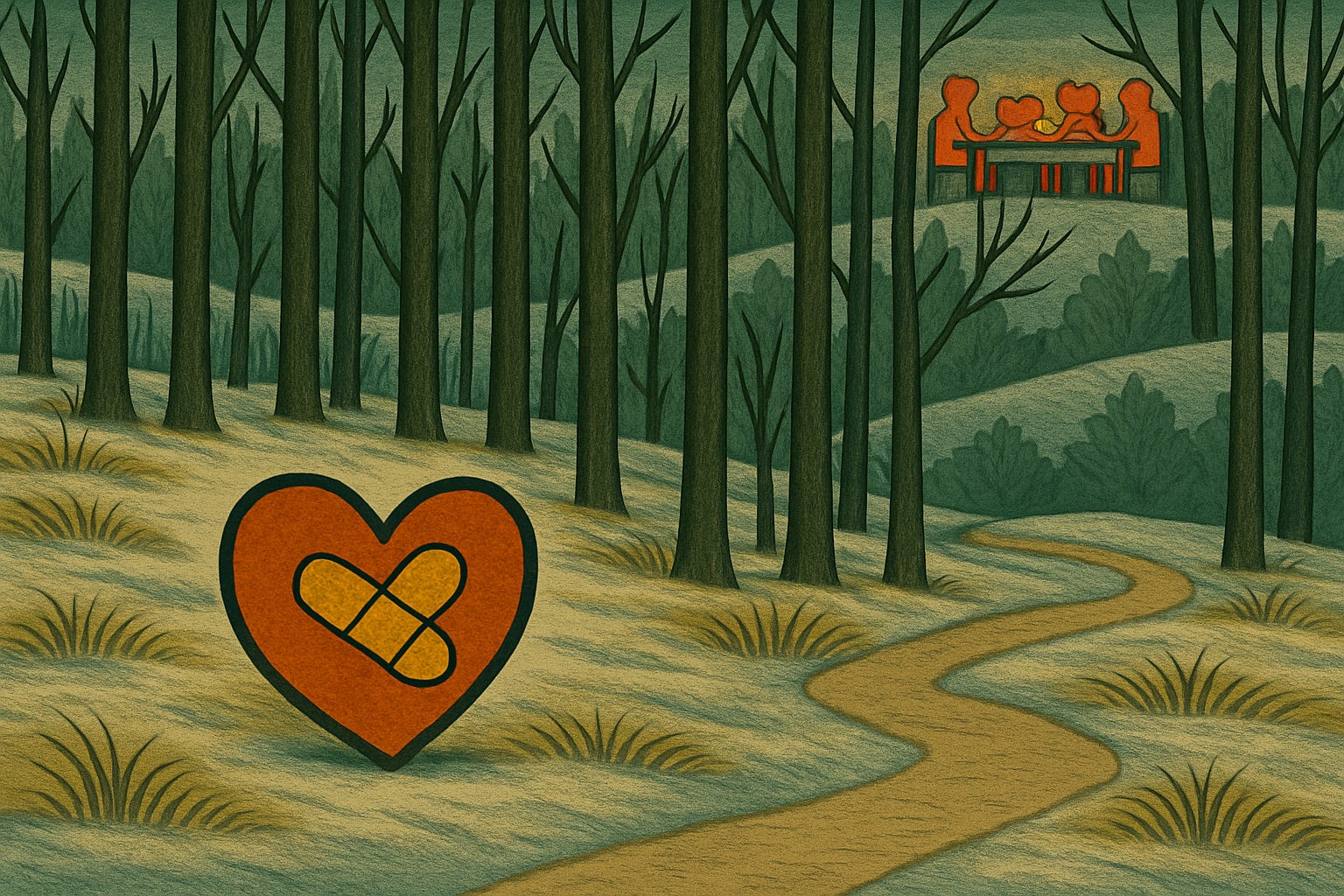
The Importance of Ritual
Holidays are laced with memory and tradition. These structures help us navigate the darkest days of the year. But inside these traditions are memories of holidays past—some pleasurable, some difficult.
One of my clients recently recalled her mother’s light, sparkly Christmas cookies—rolling them out, cutting shapes, sprinkling red and green sugar together. But in the next moment, she remembered a Christmas spent with her father and his third wife, where there was nothing for her under the tree. The “holiday cookie jar” is almost always bittersweet.
In many families I work with, the “Ideal Holiday” is at war with the “Real Holiday.” Estranged parents agonize over invitations that will likely be refused. Adult children are torn about joining parents when the relationship feels toxic. We may desire our familiar rituals, but we must also weigh the emotional cost.
What If I Pivot?
You ask, “Is this just how it goes now?” But before asking that, look at what you actually did: You pivoted.
It is difficult to be flexible when we are clinging to tradition. However, as Priya Parker reminds us: “Don’t become a slave to tradition. Ask yourself what the gathering is actually for.”
If the purpose of Thanksgiving is gratitude and warmth, you cannot achieve that at a table serving ice. Your flexibility allowed you to join a gathering that met the purpose of the holiday, rather than just the form.
But now you are worried: Was this pivot something to be ashamed of? Is the version of kindness where you take care of yourself morally acceptable?
What about my Moral Compass?
I can see you are wrestling with strong internal conflict. You have a moral guideline that says, “A parent never gives up,” or “A grandfather endures anything to stay close to his grandchildren.”
By choosing friends over family, you feel you violated that ethic. You found a warmer table, yes, but now you are haunted by the possible cost. You ask: Did I just make the estrangement worse? Have I jeopardized my access to my grandchildren by prioritizing my own comfort?
As therapist Nedra Glover Tawwab notes:
“Guilt is the feeling that we have done something wrong; it doesn’t mean we actually have.”
I want to echo Nedra: You were in a tough spot, and there may not have been a difficulty-free choice. Sometimes, staying in a hostile environment does more damage—for everyone—than stepping away. If you had forced yourself to endure the coldness at your own table, resentment might have festered or regrettable words might have been spoken.
You chose to relieve the pressure and find a place where you were welcomed. That isn’t “wrong”; it is emotional survival. Practicing self-care is a necessary muscle to flex during estrangement. Putting your guilt in perspective clears emotional space for the next time you are together with your loved ones.
Redefining Family Identity
We are witnessing a cultural shift. We grew up with a definition of family based on obligation and cohesion. Today, society is moving toward a definition based on choice and freedom.
We are in a time where “Holiday” does not necessarily say “Family.” It says “Gather”—with whomever you choose. It says celebrate in your own way. You aren’t just breaking a tradition; you are finding a gathering that fits your current reality.
Does This Change Who I Am?
Your identity at the holidays may be linked to carrying out specific roles. When we strip away the external rituals—the turkey, the specific house, the table setting—we can feel unmoored. When we feel we are losing roles, like grandfather and stepfather, we can feel we are losing ourselves.
Reinforcing other aspects of your identity will help bolster you for upcoming challenges. Understand that, as much as you hurt missing your stepchild and grandchildren, you are more than those roles. Their distance is not an invalidation of you.
Anchoring Yourself
A key to surviving the holidays is grounding yourself physically (yoga, walking, breathing, crafting) while making protective changes to your holiday routines. Remind your body that you are safe, even if the scenery has changed. This grounding will help you navigate the shift without losing track of who you are.
Consider This:
(Guilt + Obligation) × Family Pressure = Disaster
Punting + Repair = Hope
So, Dear Lonely, You ask: “Is this just how it goes now?” Not necessarily. Relationships have seasons. Just because you stepped back this fall doesn’t mean your relationships are gone forever. In fact, by protecting your own dignity and deepening your identity, you ensure that if and when the thaw comes, you will be whole enough to join in.
Warmly,
Kathy
This is column # 15
Please write to me in the Comments section or email me @ ksinsheimermft@gmail.com
This does a good job separating role loss from identity loss. Mourning the future you imagined while still protecting your dignity feels like the hardest and most necessary work during estrangement.