

Dear Kathy,
Thank you for your writing. It's been a lifeline, giving me language for the silent grief I've been carrying since the estrangement from my only child.
I raised my child alone after their father left, sacrificing my own resources to provide for them, longing for a relationship of mutual love. Instead, I often felt criticized, valued more for what I gave than for who I am. When I finally set a financial boundary, their cold response made me feel my years of sacrifice had gone unseen.
I grieve the loss of the bond we had and the closeness I hoped we might share as adults. Sometimes the grief is unbearable. But I also see this distance as a chance to finally heal and rebuild. I'm now creating a peaceful life for myself, turning toward my health, yoga, and writing. I am practicing saying "no” something I never allowed myself before.
Still, I carry a heartbreak that feels hard to name: How do I live with the loss of my child, who is still alive but feels unreachable? How do I move forward when I love them, yet know I may not see them for years if ever?
A Mother Trying to Find Peace after years of withstanding abuse.
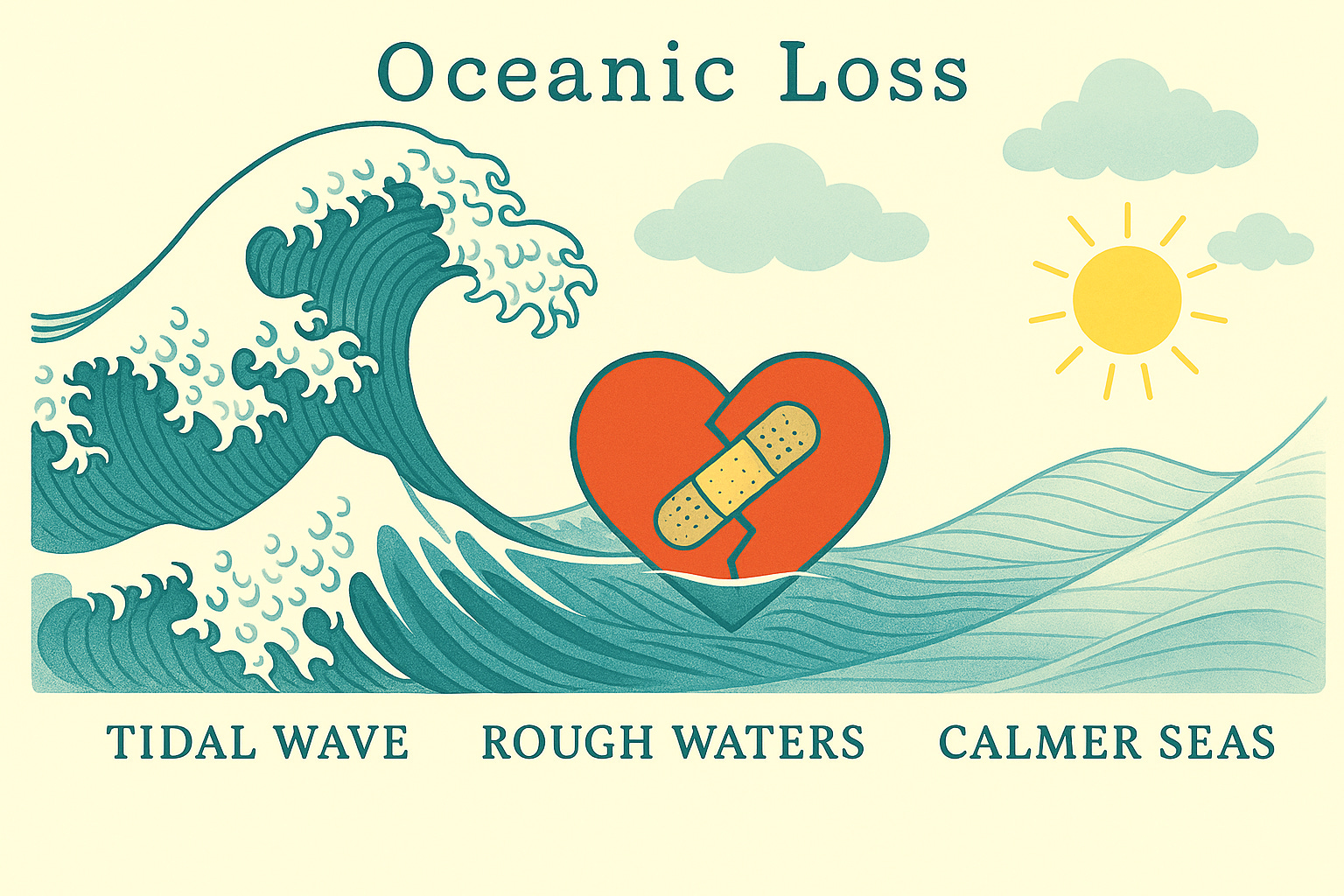
The grief of losing someone who is still alive but feels unreachable is a unique and profound sadness. It's a feeling of being in "Rough Waters," where the initial shock of loss may have passed, but the emotional current is still powerful.
Your question, Dear Estranged, is about redirecting your life from the future you imagined to a future that is possible. Your child may return one day, but for now, how can you find your way to a more peaceful life? How can you take back your own life and direct some of that parenting energy toward yourself? You may be afraid that if you turn your energy inward, your child will never come back. But those are not the same thing. In fact, it may be easier for your child to return if they see you have created a life for yourself that is satisfying and sustaining.
I'm glad to hear you are already turning toward your own healing, nurturing your health, and creating a peaceful life. These are crucial steps.
(For my readers: I want to point out that Emotional Heartbreak is common on both sides of an estrangement. Today, I am responding to an email from a mother experiencing deep heartbreak. It’s important to note that Adult Children and other family members experience deep heartbreak as well.)
The Modern Parent-Child Bond
It may help to understand some of the social shifts that contributed to this point. The intense bond between parents and their adult children is a new phenomenon. It's the product of an intensive parenting style that makes a parent's identity inseparable from their child's well-being. This has been compounded by a difficult economy that led to more emotional and financial support for longer periods. The final piece is technology, which created a "digital umbilical cord" of constant communication, making it hard to establish traditional boundaries.
As a result, the natural separation between your life and your adult child's life did not occur as it might have in previous generations. To grow and separate, your child may have felt the need to put distance between themselves and you, believing it's for their well-being. For you, there is great heartache in this.
Finding Meaning and Letting Go
Your life has been built around your child for a long time. They are a precious part of your life, and the goal is not to "get over" this loss, but to learn how to hold both the love and the grief at the same time. David Kessler, who added a sixth phase to Elizabeth Kubler-Ross’s grief model, calls this step "finding meaning." For you, finding meaning is about accepting a reality you can't control and creating a new phase of life for yourself.
Letting go feels drastic because it is. It's a deeply painful act of giving up connection in a relationship you can't control—and one of the hardest things a parent can ever do. Yet, letting go of the unchangeable is also the essential first step toward your own healing and well-being. As therapist Deborah Reber suggests, "Letting go doesn't mean that you don't care about someone anymore. It's just realizing that the only person you really have control over is yourself." This is where your power lies.
A Path Toward Peace
You have already taken an essential first step by refocusing your goals. This is where a new kind of peace can be found. As you continue this journey, consider these possibilities:
Acknowledge Your Grief and Practice Self Acceptance: The heartbreak you're feeling is valid and does not diminish your worth as a parent. You are not alone in this pain. Give yourself permission to feel it without judgment. Many parents feel shame at having been estranged. This can cause them to become isolated. Find friends you trust where you can share this painful reality without judgement.
Seek Support: Consider joining a support group or finding a therapist. This can provide a safe space to process your feelings and help you continue to invest in your own life. Some parents find their children are willing to join them in family therapy, while others start the process on their own.
Nurture your own ability to emotionally support yourself as well. In my yoga class today, we were told to put our hands over our own hearts. Looking within to find the capacity to nurture ourselves is key to finding support in this difficult time.
Reclaim Your Life: You have already begun to return to the parts of yourself you may have set aside—your interests, your friendships, and your dreams. This is a chance to find your old self again and begin to embrace the new phase of life that awaits you.
Explore Radical Acceptance: As recommended by Dr. Joshua Coleman, this is about accepting the reality of your situation without judgment. It doesn’t mean you have to like it, but it helps you stop fighting a reality you cannot change. It could be helpful to read Dr. Coleman’s recent writing on this topic in his Substack column, Family Troubles.
So, Dear Estranged, this is what finding meaning is all about—not in your child's choices, but in the here and now of your own life. You have already begun to take steps that will help you create the next chapter.
Best wishes for your future growth.
Please send me emails with your questions about estrangement to ksinsheimermft@gmail.com
This is column #3
Your words are so wise for those experiencing estrangement, but also applicable to anyone living with unavoidable sources of disappointment and pain in their lives.