

Dear Kathy,
You wrote about how the holidays can be tough for families with estranged family members. Part of what’s hard, I think, is all the expectations for how the holidays should be.
In a lighter vein, my family members all have particular dishes they expect at our holiday meals (sweet potatoes with marshmallows, grandma’s cranberry-orange relish. etc.). In a more serious vein, I want, almost expect, my family members to be present at the holiday table. When someone feels they can’t comfortably attend, I feel upset. I miss them, but I also feel hurt by their rejection. The worries about who will attend our gatherings leave my holidays with a heavy feeling
I’m trying to figure out if there are deeper reasons for the heaviness. Are we remembering our no-longer-living relatives? Are we feeling past hurts—rejections, slights—from arguments or disappointments we had at the holidays? Are we reminded of holidays past where difficult feelings overtook any possibility of creating good memories. Like experiencing the false gaiety of our first Christmas after our parents’ separation where Mom was with her new boyfriend and Dad was alone and sad?
If we are haunted by old memories, hurts, or even wounds at the holidays, how do we exorcise the ghosts?
Sad, scared and wishing for better holidays
Dear Wishing for Better Holidays,
Thank you for articulating this so well. The “heaviness” you feel is not only the emotional weight of old hurts, and unmet needs, but also the presence of family ghosts. When you ask, “Are we haunted?” the answer is a resounding yes.
Think about Día de lost Muertos (Day of the Dead), which is being observed as I publish this column. In that celebration, the dead are intentionally recalled and honored. This provides a striking contrast to many of our family holidays where we often unintentionally summon our ancestors. The heaviness comes from the stealth return of those ancestral ghosts: the unresolved wounds, expectations, and behaviors we experienced and inherited.
The rituals of the holidays hold both good memories and tough, unresolved conflicts. We may look forward to celebrating, but we also may wind up reenacting old family dramas in our own emotional lives. The way we wind up connecting with our ancestors is not just through recipes that are passed down, but through behaviors.
If our grandmother froze out our mother’s emotional needs by giving her the silent treatment, and then our mother did the same to us, we might do it to our children. And, if we haven’t learned a better way to communicate our upset to our loved ones, we may find ourselves performing the silent treatment at the holidays. An upset parent silently sulking does not make for a comfortable family celebration!
If we are not aware, we unwittingly channel our ancestors, holding onto old unresolved feelings from interactions with them. Most powerfully, we unconsciously express our unresolved wounds through our own emotions and behavior.
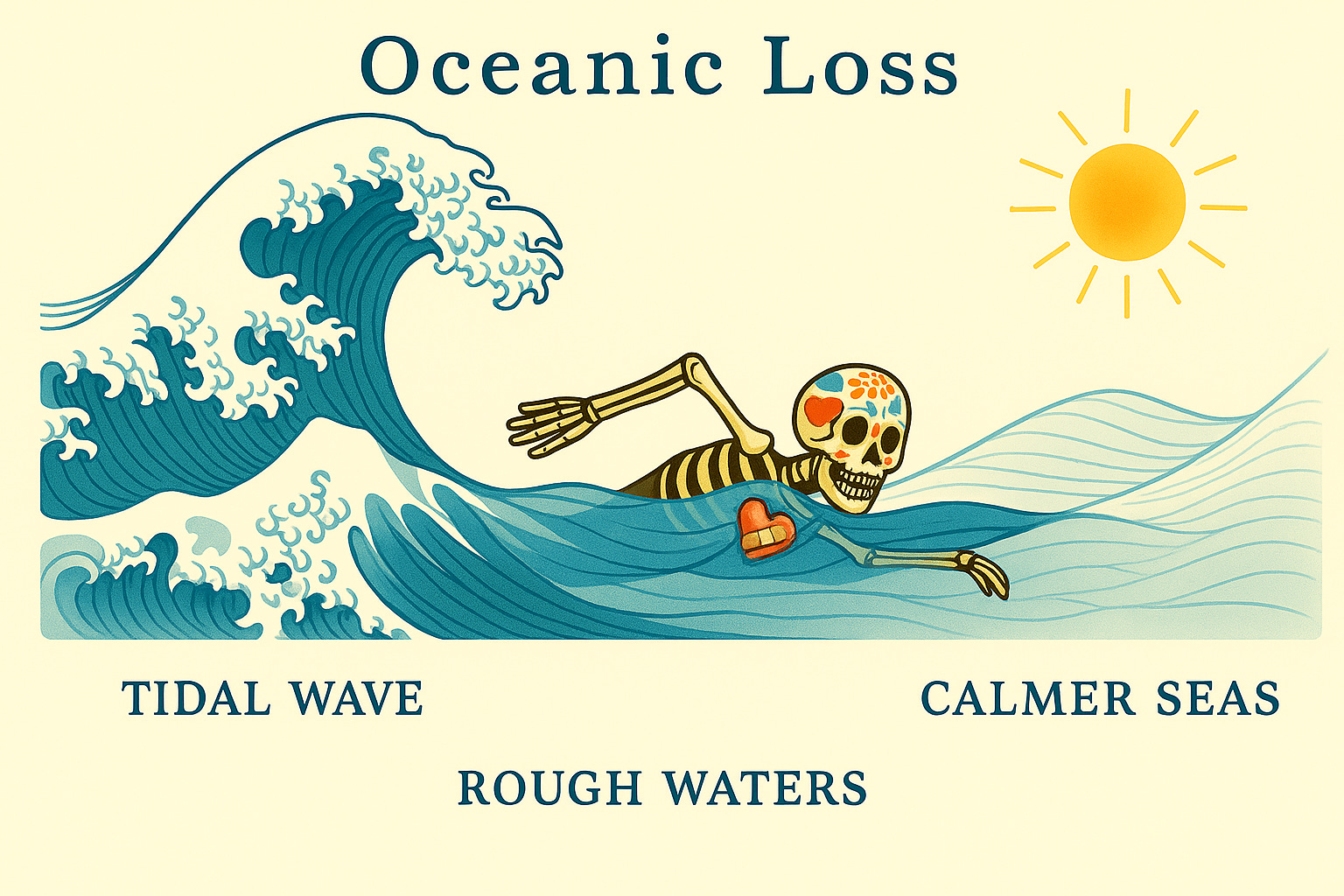
The Mechanism of the Ghost: Inherited Enactments
The holiday season is a perfect trigger because it’s so rich in sensory and emotional cues. Your must-have dishes are powerful time capsules. The seriousness with which we treat them symbolizes our deep need for reassurance and comfort—a hope that this sameness will guarantee a successful celebration.
When a loved one chooses not to attend, you experience the hurt and anger of rejection. That feeling is real, but it often becomes an embodiment of something older. The ancestral ghost isn’t a spirit in a sheet; it’s the unconscious repetition of an unresolved past dynamic.
I saw this with a client whose son’s estrangement caused her excruciating pain. As we explored her current hurt, she was surprised to recall a profound sense of rejection from her own mother during adolescence. Her mother had rushed her daughter’s separation process, withdrawing from my client during those challenging teen years. Without her mother’s emotional availability, my client stumbled through her adolescence, but with too much freedom and not enough authority to push back against.
My client’s current pain is complex: she misses her adult son, but she is also somatically re-experiencing her own rejection by her mother. The current absence triggers the internal wound of the past. Trying to host while setting aside these hurts makes her holiday a swirl of feeling, peppered with both satisfaction and unexpected tears.
The Ghosts of Estrangement: Unique Challenges
In addition to the loss of no-longer-living ancestors, you have a family member who is intentionally absent. This loss can create an emotional vacuum that threatens to hijack the gathering. This is the unique challenge of the holiday—some of you have chosen to be together, and others feel the holiday would be better spent apart.
The Gatherers have chosen to come together to celebrate family and the holiday. The challenge will be to enjoy each other’s presence, while respecting the estranged family member’s choice to remain apart, making their own celebration. It is generally recommended to acknowledge their absence, and not to dwell on it.
Estranged Adult Children do not attend in order to protect themselves emotionally. They calm their ghosts by choosing relationships that are less fraught. It is important to respect their needs—this isn’t the holiday you will be able to be together.
All estranged adult children I have talked with tell me they have tried, unsuccessfully, to communicate their needs to their families. It is important to respect this, while knowing you, too, have tried to make a bridge to your child. Wish your child well, in a text or in your heart.
Quieting the Ghosts: Presence and Temporary Acceptance
“The truth is that things don’t really get solved. They come together and they fall apart. Then they come together again and fall apart again. It’s just like that. The healing comes from letting there be room for all of this to happen: room for grief, for relief, for misery, for joy.”
— Pema Chadron (Buddhist nun and author on embracing difficult emotions)
A crucial step is to practice self-compassion by recognizing the inherited weight your relationships carry. Understand that you, and likely your fellow celebrators, will be remembering previous holidays—the good, the bad, and in-between. Your ghosts of holidays past bring complicated emotions with them as they return to haunt the table. Being aware of the potential arrival of these uninvited ancestors will offer you a window into why you are feeling what you are feeling, and an opportunity for compassion for yourself and others.
If your celebration takes a difficult emotional turn, the key is to reframe the emotional experience. First, recognize, name, and express the feeling, at least to yourself. Honor your feelings and responses by giving them the room they need today, then intentionally set them aside for later. This is the core of making the holiday as genuine as possible: you accept your ghosts and the ghosts of others, choosing kindness for yourself and for those around you.
Ultimately, make space to understand the complexity of your gathering. This holiday is an attempt to come together for hope and togetherness, not for bad feelings, shame, or regret. Understand that achieving this goal won’t be simple or perfect, but with conscious effort, it could be good enough.
The ancient Aztecs, who were among the originators of Day of the Dead, celebrated for a month, allowing themselves time and space for grieving, living and togetherness. We don’t give ourselves that month, but we can remain present with our thoughts, feelings, memories, and love.
So, Dear Wishing,
Your feelings at the holidays reflect the presence of current absences and ancestral ghosts. Welcome the ghosts you can accept, and see if you can quiet those whose demands are too great. Give yourself permission for your gathering to be messy, and for the feelings to be complex. You may be missing important family members, but can aspire to be fully present with those who have joined you.
Best,
Kathy
I welcome your questions: ksinsheimermft@gmail.com
Two Prompts:
What gets you through the holidays with a bit of grace for yourself and others?
Who are your ghosts and how do you respect but take space from them?
This is column # 10
I am so weary. I dedicated my life to raising my four living kids. Now I am not worth knowing or seeing. My goal now is to find courage and an answer for me to silence this rejection and pain pain. I am an intelligent, educated woman who has been reduced to begging for crumbs of kindness. I am done begging. So be it!