It’s Valentine’s Day, and it has been two years since I’ve seen my daughter—my “sweetheart.”
Ours is a typical story: we were very close until she began to pull away, first into “low contact,” then, recently, “no contact.” I always thought our bond was permanent.
A widowed friend told me that after forty years with a spouse, your brains actually meld together. I wonder if that happened to us? If my daughter was so fused to me that she had to rip herself away just to be her own person? If she ripped herself out of our shared brain, I’m the one left behind, still bleeding. Is that why the “holiday red” everywhere looks less like hearts and more like blood to me this year?
— Heartbroken and Bereft
Please note that this column will be speaking about a mother and a daughter, but rupture in other relationships can also hurt like this.
______________________________________
Dear Heartbroken and Bereft,
Valentine’s Day can be very painful when your heart aches. Your daughter’s need for autonomy has left you with a wound. So-called “Hallmark Holidays” can leave you feeling you do not have what others have, and don’t know how to find it. Valentine’s Day is one of those daunting holidays where you hope yours will measure up, but often leave you feeling you haven’t.
Your daughter was your “sweetheart,” and that is how you still feel. You understand she has been needing space, but you can’t wrap your head around how she has pulled away so completely. Your widowed friend’s observation applies here.
Dr. Ed Tronick, a developmental and research psychologist, tells us:
“The sense of ‘me’ is not just in my own head; it’s a ‘we’ that is created in the space between us. When a rupture occurs and the repair doesn’t follow, the self begins to feel a sense of falling apart, because that ‘we’ was a vital part of its own regulation.”
You have lost the “we” in the form of your daughter’s presence in your life. In neurobiology, we call this neural coupling. She is alive in your thoughts, feelings, and memories, but she doesn’t want a valentine from you this year and won’t let you call her “sweetheart.” Your heart and brain are aching for her, yet she cannot be the other half of your desire.
In estrangement, there is always a sense of power imbalance. You felt you were engaged in a mutually created close relationship, but your daughter has left that mutual space to create her own separate life. She may feel she can’t have contact because it interrupts the separateness she badly needs. This leaves you feeling understandably helpless.
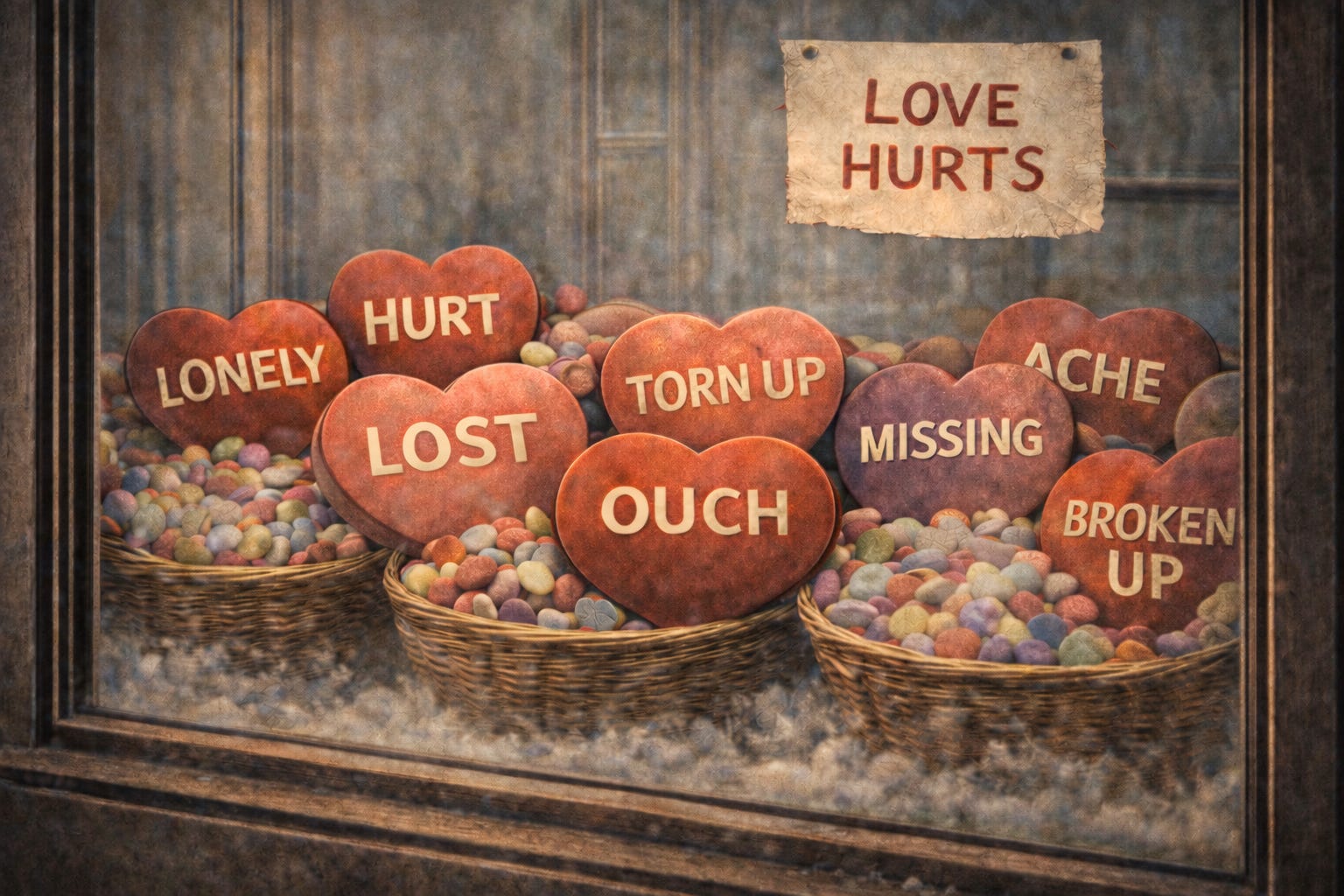
As you look at that shop window, you are experiencing what Sigmund Freud described as the unique vulnerability of the human heart:
“We are never so defenseless against suffering as when we love, never so helplessly unhappy as when we have lost our loved object or its love.”
In psychoanalytic language, “object” is a funny word, but it simply refers to the receiver of our love. Freud is pointing out a defenselessness you clearly feel.
The greatest Valentine you can give yourself this year is the gift of self-compassion. It is the realization that your heart is vast enough to ache for your daughter who is absent while still having room to love the people—and yourself—who are right here. As Pema Chödrön teaches us:
“The most difficult times are the most productive. If we can stay in the ‘middle’—the place where we feel completely helpless and raw—without trying to escape or fix it, something starts to shift. We begin to discover a heart that is wide enough to hold both the love and the loss at the same time.”
How do we stay with these rough feelings?
1. Make Space for the Ache The first step is to stop fighting the biology of the yearning.
Allow the ache: When we try to “logic” ourselves out of missing someone, we often just increase our own distress.
The Body Knows: Acknowledge that attachment is felt in the body. If your heart or brain feel like they are “bleeding,” it is because you are grieving a connection that felt essential. Making space for that feeling—not as a sign of failure, but as a sign of your humanity—is the beginning of self-compassion.
2. Notice How You Love We all attach in ways that we have learned. Our expectations may be patterned on what we think love looks like based on our experiences growing up. You probably love your daughter as you were loved, or as you wish to have been loved.
Your daughter currently wants to be loved differently—more separately. In your model, this is painful and rejecting. I can tell you that in my practice, most estranged children tell me they still love their parents; it’s just that they can’t be with them without feeling deeply uncomfortable. Noticing how you love will show you that your expectations are a reflection of your history. This is where you might apply Chödrön’s wisdom: staying in the rawness to find something new.
3. The Pivot: “Love the One You’re With” Once the ache has been acknowledged and the patterns have been seen, it is time for me to quote Stephen Stills one more time: “Love the one you’re with.” Appreciate the love that is being offered to you on Valentine’s Day.
Dear Heartbroken and Bereft,
This holiday is a rough one! Your loved one wants space, not closeness, on this holiday of love. Today has an extra sting.
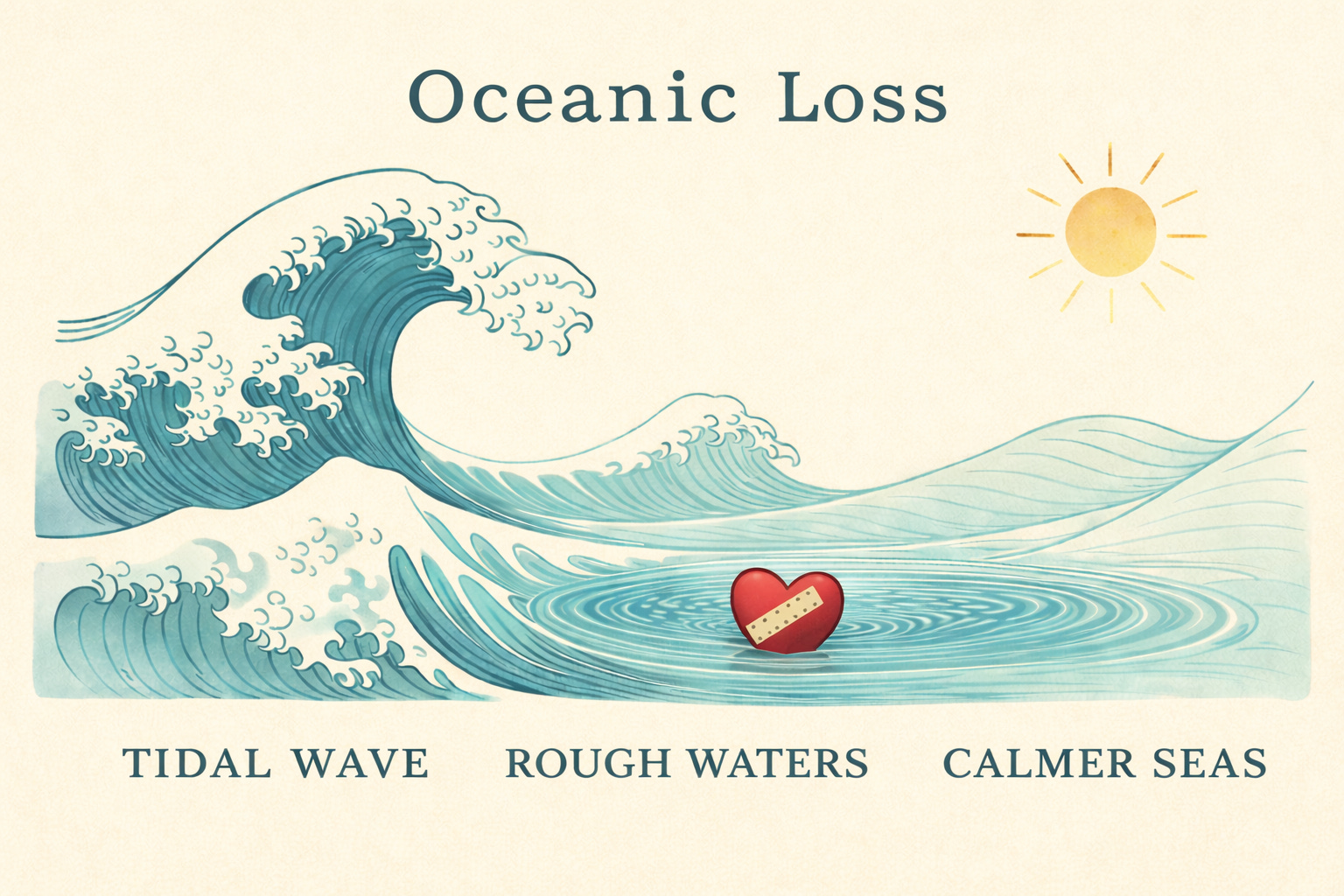
You are brave to write to me, which tells me your heart is big and your feelings are quite stirred up. In my model of Oceanic Loss, you are back in the Rough Waters. You may have been in Calmer Seas recently, but this holiday has brought a surge. It is okay to reach for a life jacket, some sea sickness meds, and a box of tissues. And also to reach for those who are dear to you and near to you.
I hope that during this storm, you can think of yourself as being in the “middle,” discovering a heart that can hold both the love and the loss at the same time.
Best,
Kathy Sinsheimer, MFT
Please reach out to me in the Comments section or at ksinsheimermft@gmail.com
This is column # 25
Thanks for reading Kathy Sinsheimer, MFT “Dear Estranged”! Subscribe for free to receive new posts and support my work.
I’m glad to hear about your close and wonderful relationship with your mom and also glad you were able to have that with your daughters. I’m sorry to hear they have estranged themselves.
Your thought that this would have been unimaginable, kind of like the twin towers is a good comparison.
I appreciate hearing from you/connecting on Valentine’s Day!
I ache not only for myself, as both daughters have gone "no-contact", but also collectively for all the parents who had a close relationship with a child that has since been severed. Since cutting off one's parents seems "in", I am feeling a larger ache for mothers in particular, who have lost an essential connection in their life.
I could no more visualize what has happened to thousands of parents than I could visualize the image of planes flying into the twin towers. I had a close and wonderful relationship with my mom, and I had the same with my daughters until just a few years ago. Decades of a close relationship were wiped away, almost casually, and I am not unique.



I’m glad to hear about your close and wonderful relationship with your mom and also glad you were able to have that with your daughters. I’m sorry to hear they have estranged themselves.
Your thought that this would have been unimaginable, kind of like the twin towers is a good comparison.
I appreciate hearing from you/connecting on Valentine’s Day!
I ache not only for myself, as both daughters have gone "no-contact", but also collectively for all the parents who had a close relationship with a child that has since been severed. Since cutting off one's parents seems "in", I am feeling a larger ache for mothers in particular, who have lost an essential connection in their life.
I could no more visualize what has happened to thousands of parents than I could visualize the image of planes flying into the twin towers. I had a close and wonderful relationship with my mom, and I had the same with my daughters until just a few years ago. Decades of a close relationship were wiped away, almost casually, and I am not unique.