

Dear Kathy,
We agreed to be together for Thanksgiving to try to have a traditional holiday, despite the tension in the news and our political differences. Our group was: my husband, his two grown children, me, my two grown daughters, and my sister with her two young children (ages 6 and 8).
Just as a bit of background: my daughters and I went through a high conflict divorce when they were teens. They are currently low contact with their dad. We have been able to remain close, but in the back of my mind, I know they could step away from me, too.
For a meal like Thanksgiving, we have easier differences, like my daughters being Vegan while the rest of us are not. That was fairly simple. However, we knew the Israel-Palestine conflict was a landmine, so we made a pact: No politics at the table.
Then, after a few glasses of wine, we lost track of that agreement. My husband is Jewish and staunchly pro-Israel. My daughters are not Jewish, very politically active, and passionately pro-Palestinian. I don’t even remember who started it, but suddenly there was shouting. There was so much loud yelling that my sister rushed her little ones into the other room. My husband called my girls naive; they called him deeply cruel. My daughters stormed out before dessert. The rest of us tried to carry on, but the mood was subdued and I was painfully upset.
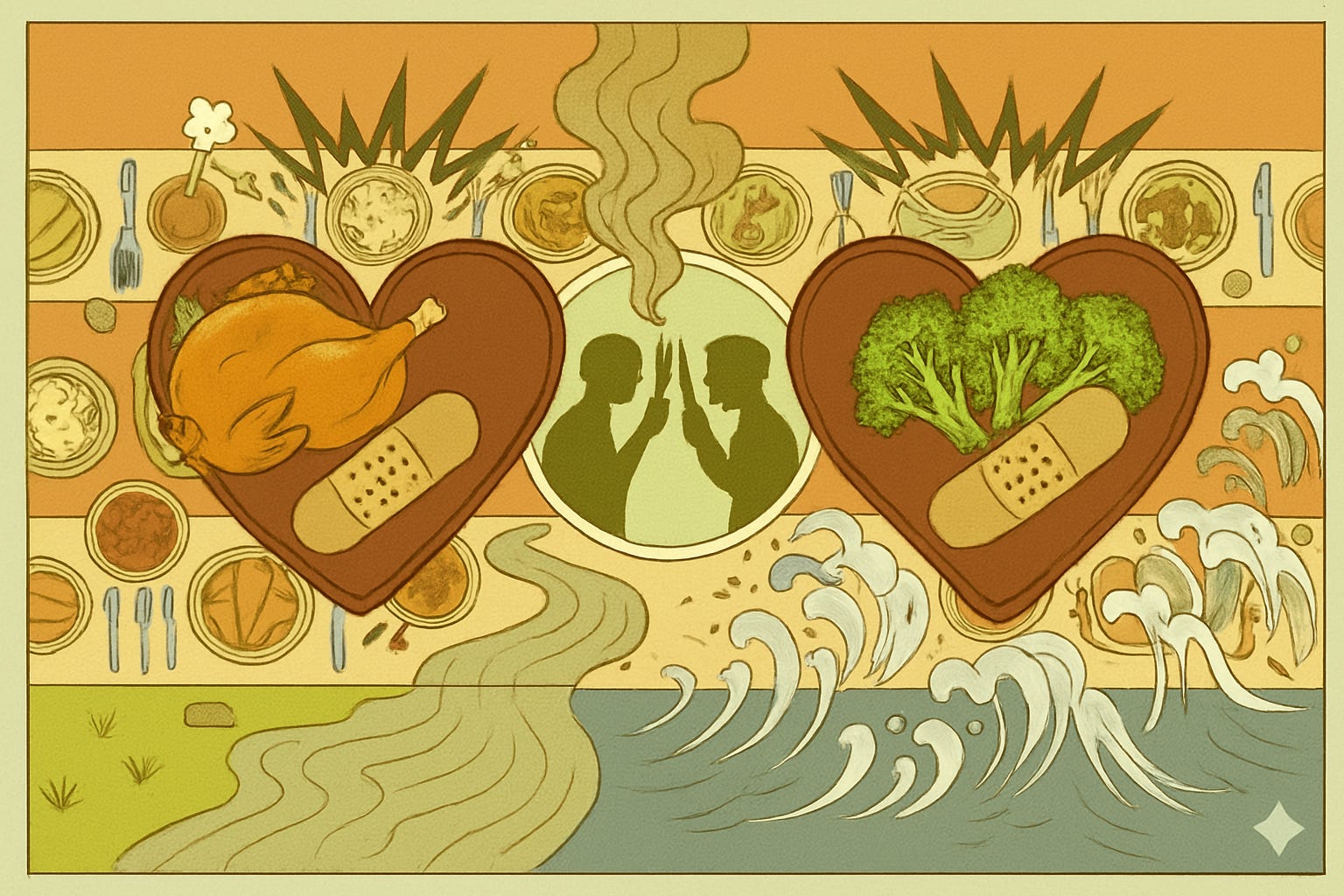
There had been yelling at the table in my first marriage—I didn’t want a repeat of that in my blended family. It’s hard to create family after divorce. We have worked at it and I thought we were doing pretty well. However, what happened at this gathering tells me otherwise. I am deeply troubled and disappointed.
Now, the fallout is severe. The girls have told me they are cutting off my husband. They do not feel accepted, let alone respected. And they are being chilly with me. They have “deep ethical concerns” about my remaining married to a man with his views. They view my neutrality as complicity.
I am terrified I won’t see them for Christmas. I feel like I have to choose between my husband and my children. What has happened to us, and is there any way to fix this before December 25th?
Worried,
Needing Peace Talks at Home
Dear Needing Peace Talks at Home,
You are definitely not the only family waking up with a “holiday hangover” of regret this week.
But to answer your question—”What happened?”—we have to look at two different battlegrounds: the one in the news, and the one in your living room.
The situation in the Middle East is objectively agonizing. It makes perfect sense that your family members are emotional about it. However, when we are trying to discuss such a heightened conflict, our feelings can get stirred up, leading to our own dynamics getting involved.
This brings me to the second arena of conflict: your blended family system. While the war in the Middle East is very real, in families, politics often stand-in for other, unresolved issues. When a political disagreement escalates to the point of storming out and cutting contact, it is rarely just about the news. It is also about the relationship.
In blended families, a stepparent can become a focus for anger that has roots in the original divorce. Divorce is a significant disruption that children do not choose; it is a reality created by their parents’ decisions. Old pain often lingers, there to be triggered by the stress of a holiday gathering.
This doesn’t mean your daughters’ support for the Palestinian cause isn’t real or valid—it absolutely is. However, the intensity of their reaction likely carries extra weight from an earlier time. While they are genuinely invested in a conflict far away, they may be reacting with the emotional memory of the conflict that occurred in their own living room years ago. It is also important to recognize that your husband is part of this sensitive ecosystem, too; his sharp reactions were likely fueled not just by his political stance, but by the heightened stress and vulnerability inherent in navigating a blended family dinner.
Brené Brown uses the term “chandeliering” to describe a sudden, intense outburst of anger that is actually the result of suppressing hurt for a long time. It’s pain that has been packed down until it explodes upward. If this applies in your situation, it indicates that the argument is real, but the level of hurt being expressed isn’t just about the present moment. It is due to the opening of old wounds through the eruption of this current battle site.
It is essential to honor the depth of your daughters’ position. For them, this likely feels less like “politics” and more like a fundamental question of human rights and justice. When they speak of “ethical concerns,” they are sharing their authentic moral compass.
In a New York Times opinion piece published just for this holiday season, Mel Robbins and Dr. Karl Pillemer advised: “This Thanksgiving, let your family members live how they’d like to live. They’ll be grateful for it—and, years from now, you may be too.”
These thought leaders make it sound so simple, as if we can just decide to bypass our triggers. But they leave out that this advice is deeply difficult to follow. The ability to give space for the thinking and beliefs of others is a hard-won skill, not a switch we can simply flip because a newspaper told us to.
So, what to do about Christmas?
Your adult children are upset enough that they aren’t sure if they want to come home. Your husband may not want them there. You are in a tough spot. The following may help illuminate a path forward:
Catch your breath. This just happened. Give it a little time to settle out before you panic.
Respect your daughters’ need for space. With your history of divorce and their conflict with their stepfather, your daughters may feel the need to take space. It is important that you try to understand this need for distance to create the opportunity for them to come forward again.
Ask, don’t argue. If they are willing to talk, ask them to share their thoughts and feelings—not to debate, but to be heard. Be very open and receptive. Educate yourself about their political perspective. Ask them to suggest reading and videos. This curiosity is the best way to address their fear that your “neutrality is complicity.” It shifts you from being a passive bystander to an active witness of their values.
Let go of the calendar. Do not get attached to having them this year for Christmas. A better goal would be to look to the long term. Establishing good communication and understanding will serve you over the years. Letting go of the immediate need for them to be with you on December 25th will take pressure off your conversations.
What to do in your relationship with your husband?
Blending families is very difficult. In creating a partnership with your husband, it is important to remember that you chose this partner—your children did not.
If your husband is open to it, ask him to consider the possibility that he, also, was triggered by your family gathering and may have experienced the stirring up of old hurts as well. What do his pro-Israel beliefs represent for him at the level of the family? This perspective might help him see why fighting over complex geopolitical issues while also trying to enjoy a holiday gathering in his new family did not lead to outcome he desired.
.Consider this:
Strong Differences + Unresolved Feelings = Blow Up
Awareness/Education + Acceptance of Difference = Repair
Dear Needing Peace Talks,
Holidays are rough, and blending a family is a herculean task. My wish for you is to develop understanding with your daughters through learning about their political convictions and listening to their feelings. I hope this draws you closer and allows for meaningful contact, even if it doesn’t happen on the specific day you hoped for.
— Kathy
This is column #14


The distinction between the geopolitical conflict and the family system feels essential here. Framing the blow up as layered pain rather than a single issue makes space for repair without minimizing anyone’s moral stance.