

Dear Kathy,
I have never felt more lost than now, during my estrangement from my child, Cory. How can this be? It’s like I have lost Cory, but I have also lost myself. What is happening???
Incredibly lost, lonely and cannot find my bearings
Dear Incredibly Lost,
Your pain is so clear. I can hear that while the cause of your pain is obvious, it doesn’t offer you enough to grasp the scale of your loss.
I think this is because you are experiencing a double loss: you haven’t just lost your child—you have lost a part of yourself.
Part of understanding estrangement grief comes from naming our lost roles: “I am Cory’s mother, and I can’t mother Cory right now.” But it’s more complex than our roles. Our ongoing interaction when we are loving someone develops into a part of us. That loving feeling, and that experience of being with our loved one, is a component of our identity—a way we recognize our own selves.
When contact with your loved one is cut off, it can be tougher to see that you have lost this internal piece of yourself, too. Loving a particular person creates a unique, resonant spot in you that is activated when you think of or interact with them.
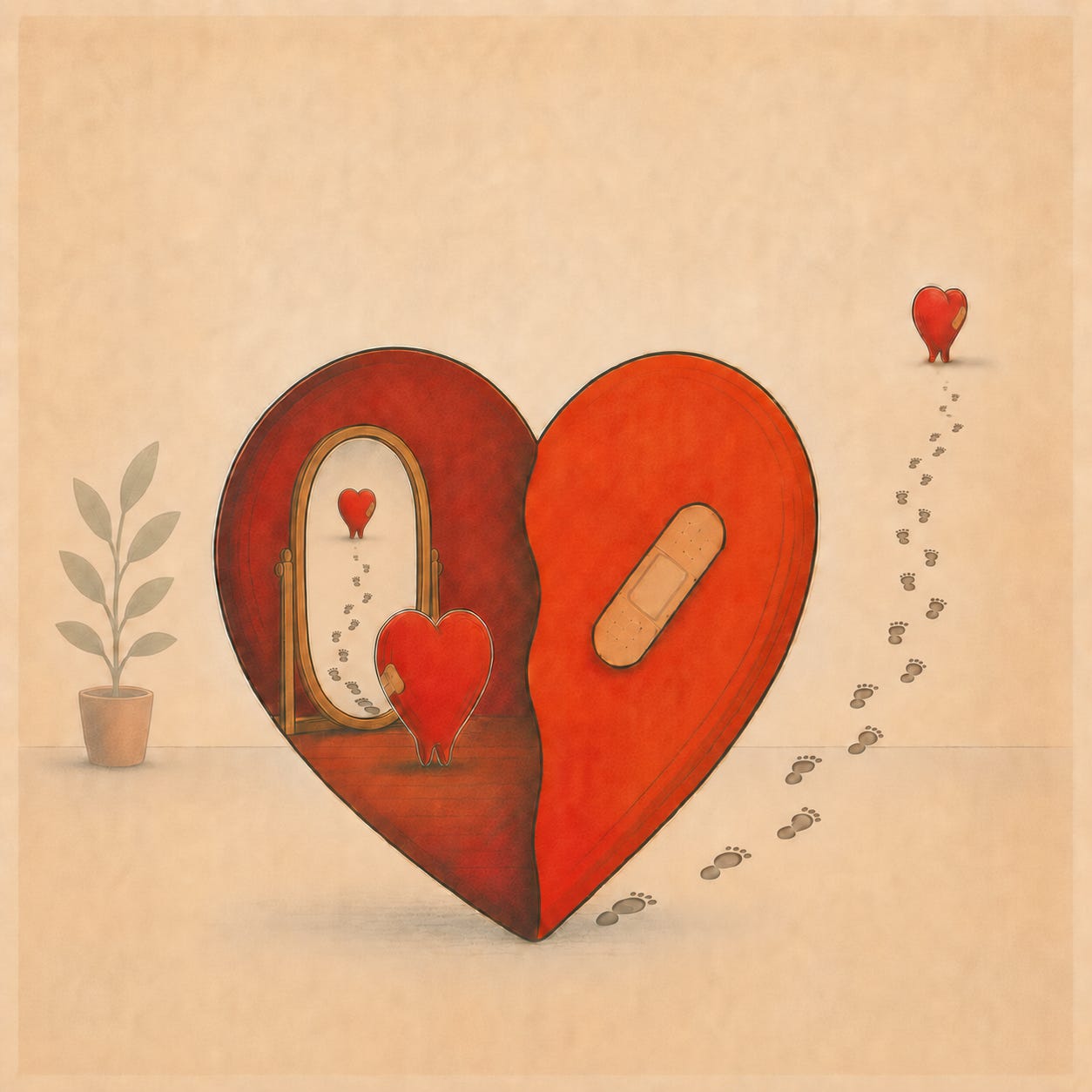
You don’t just miss Cory; you miss who you were when you were with them. You miss the “Cory” part of yourself.
Think of it this way:
“There is a part of me that grew through loving my child. When I think of it, my heart actually swells a little. My child is nowhere near me, but this spot inside is mine, built over time through my interactions with them. When I can’t be with my child, I miss them, but I also miss the way I feel within myself as a result of our long history together. I miss the 'Me' I am when I am with them. I sometimes wish I could be with my child, not just to be with them, but to feel that version of myself again.”
When Cory leaves, that version of you goes offline. The Buddhist teacher Pema Chödrön often writes about the deep groundlessness that happens when a major life relationship is lost. She points out that we are pushed to step away from a version of who we used to be, pulling us toward painful questioning of “who am I now”? It is an unwelcome transition, but it also reminds us that our identity is not fixed.
In my drawing, your estranged loved one is walking away, but the part of you that sees and experiences yourself through that relationship is walking away, too. We can be so focused on having been left, that we don’t initially see the version of us that seems to be leaving as well.
How to Grapple with Your Double Loss
Slow down and inventory your feelings. See if you can begin to outline this part of your identity. Think of those MRI scans where a specific spot in the brain lights up in response to a stimulus. You have an internal spot that lights up at the thought of Cory. Ask what you can begin to learn about that part of yourself.
Grieve that part of yourself with clarity. Grieving asks that you recognize your loss as completely as you can. Once this lost self is a bit clearer, you can say to it: “I know you. I feel _____ about you. I am working to accept this.”
Look for other ways to experience those feelings and parts of yourself. If you can identify the qualities you are missing in yourself—like your capacity to play or laugh—ask if there are other ways to experience them. Cory may not want to be together right now, but are there other relationships or activities where that part of you can safely step forward? If you are too raw, give yourself time until you are ready.
Let others help light the way. If you are having trouble finding this part of your inner self beneath the fog of grief, ask trusted friends or family to talk with you about Cory. Their comments may spark a recognition that helps you see yourself better.
Be as kind and loving toward yourself as possible. Estrangement easily tricks us into finding fault in ourselves. While a gentle self-inventory is important, plaese conduct it with warmth and self-compassion.
_______________________________
Dear Incredibly Lost,
You have named the very heart of the disorientation that accompanies estrangement. It makes complete sense that you are struggling to locate your full self right now. These steps are meant to help you find a more centered internal space—a quiet vantage point from which you can begin the repair necessary to feel more whole again.
My wishes are with you as you look inward, find your footing, and gently reclaim your whole-est self possible at this time.
Best,
Kathy
P.S. If you want to practice moving through these stuck places together, I’m presenting a workshop on August 1 with Ann Dyer, the founder of Mountain Yoga. We’ll gather in Oakland and on Zoom for an afternoon of gentle yoga, journaling, and talking through how estrangement lives in the body. You can find more info and reserve your spot here: https://www.m-yoga.org/living-with-estrangement.html
Please reach out to me in the Comments Section or at ksinsheimermft@gmail.com
This is column #47
Wonderful piece. We are so looking forward to your coming to Mountain Yoga to share your wisdom with our community on August 1.
The identity loss is such a huge dynamic in parent-child troubles.
I came to realise that it was a necessary part of a personal growth journey that became the basis of a stronger than ever relationship with my child.
In finding who I am outside of being a mom and being that woman in the relationship, we forged a new connection.